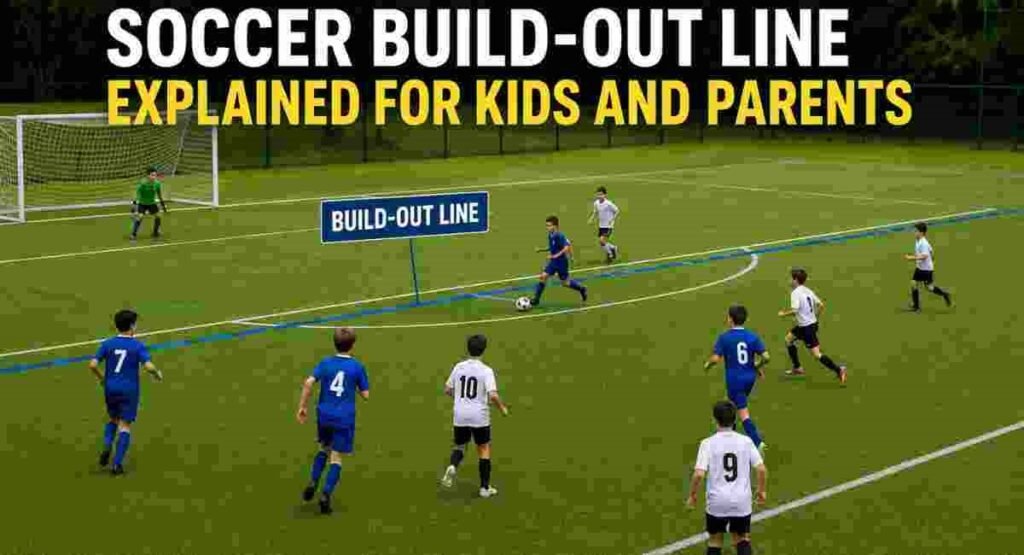
If you’ve spent any time standing on the sidelines of an Under-9 or Under-10 youth game, you might have noticed a curious second set of dashed or solid lines running across the field at about the midway point between the penalty box and the center circle. To outsiders, these seem like random paint splatters, but they’re actually one of the most important developmental rules in youth sports today.
For young kids just learning the ropes of positioning, understanding the idea of the soccer build out line is a bit of a revelation for coaches, players, and viewers alike. The inclusion of a universal soccer build out line will allow youth academies to promote passing-style soccer out of the back without having tiny goalkeepers boot the ball as far as they can see, up and down the pitch. When a defensive player charges, he will probably be met by an offensive player retreating to the soccer build out line, the premium area for receiving off a pass, dribbling, or holding the ball.
By implementing a standard soccer build out line into weekly club practices, coaches can start the transformation of the https://cricproz.com/soccer-goal-size-by-age/ classic kick-straight-ahead-chaos game into a sport that features smarter, more cohesive team play. At the end of the day, a careful consideration of how the soccer build out line controls space on the field ensures that youth games stay deeply instructive, exciting, and safely tailored for burgeoning minds and bodies.
Table of Contents
1. FROM WHERE THIS RULE EMERGED IN US YOUTH SOCCER HISTORY
Small-sided youth games, for years, had the look of a massive, dizzying swarm of youngsters pursuing a loose ball. Once goalkeepers had caught a shot, they would then immediately punt the ball downfield as hard and as high as possible, turning the game into an unpredictable battle in the air.
A. PUNTS AND CHASES: THE CHAOS ERA IS OVER
To address this structural challenge, US Soccer initiated the Player Development Initiatives (PDIs). The establishment of official soccer build out line rules has changed the way eight-, nine-, and ten-year-old kids are taught the game. By taking away the goalie’s right to send the ball away with a big kick, the game asks young players to keep the ball on the field, use their feet, and connect meaningful passes with teammates close by.
B. BOOSTING TECHNICAL DEVELOPMENT FROM THE BACK
The underlying premise for the soccer build out line is to allow young children to play without fear of mistakes immediately getting punished because a forward from the opposing team is standing right under the net. It instructs young center-backs and full-backs how to take a pass in a controlled fashion, face safely toward the soccer build out line sidelines, and then move forward on the field with caution short-passing combinations instead of hoping for long clearances.
2. HOW THE LINES PLAY: THE FULL TOPOGRAPHY OF THE 7V7 FIELD
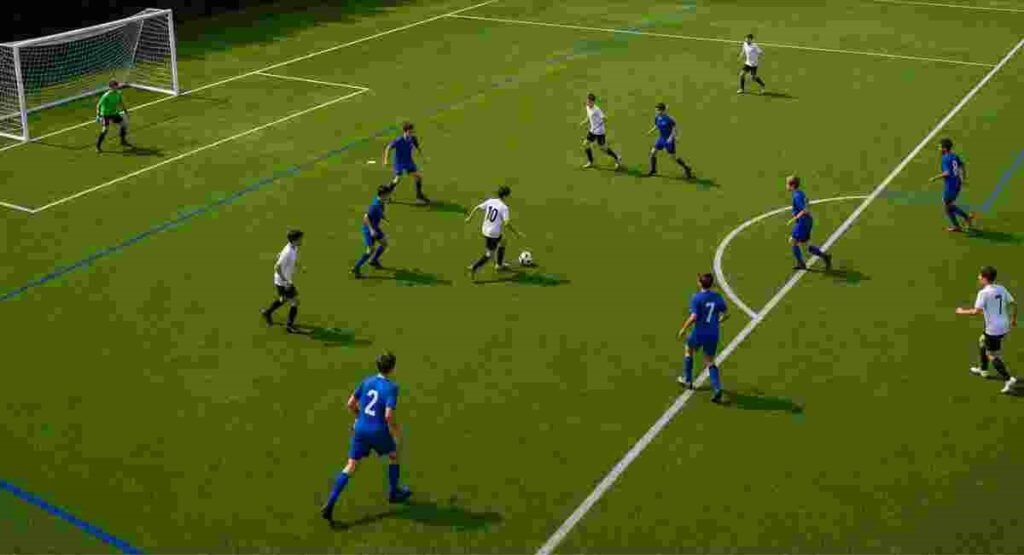
Knowing the dimensions of a 7v7 youth pitch is one of the simplest ways parents and players can prevent themselves from becoming confused by referee whistles during a Saturday morning game.
A. THE LOCATION OF THE SPECIALIZED MARKINGS
The soccer build out line is drawn on both sides of the https://cricproz.com/soccer-positions-by-number/ field on a regular U9 or U10 field. It is perfectly level with the end line and halfway between the top of the penalty area and the centerline. As per the local league complex, the line is either painted as a solid blue line, a bright dashed line, or delineated by cones placed well along the sidelines.
B. DIVIDING THE FIELD INTO THREE DISTINCT REGIONS
They carve up the field at least tactically by allowing the wear of the pitch to be segmented. The area from the goalkeeper’s endline to the soccer build out line is known as the safe buildup zone. This particular architectural design attains its goal of providing the defending team with a unique pocket of space to initiate their offense, keeping the game structured, clean, and absolutely educational US Soccer Player Development Initiatives Document.
3. THE RETREAT: RULES FOR THE ATTACKING TEAM
This developmental rule is most important in affecting play when the goalkeeper has the https://cricproz.com/soccer-ball-size-chart/ ball or when a goal kick is taken by the defending side.
A. WHEN SHOULD THE OPPONENTS RETREAT BEHIND THE LINE?
When the goalkeeper catches the ball during the run of play or the ball rolls for a goal kick, all opposing team players are required to run back immediately behind the soccer build out line. Opponents may not hang around in the penalty box or rush the defenders until the ball is officially put back into play by the keeper or the kicker.
B. THE WHEN TO RE-ENGAGE RULE
The opposing forward players are not allowed to come across the soccer build out line until the goalkeeper has released the ball, whether it’s from his hands or on a goal kick after the ball has clearly left the penalty area. If a forward is too eager and goes over the soccer build line before the play restarts, the referee will also immediately blow the whistle, stop the play, and have a do-over so the defending side isn’t put under the additional pressure IFAB Laws of the Game Field Markings Directory.
4. RESTRICTIONS ON THE GOALKEEPER: NO MORE PUNTING DORP-KICKING
After the other side retreats behind the end line, quite a technical, goalkeeper-specific etiquette applies to how the keepers restart play with the ball.
A. AVOIDING CLEARANCES IN THE AIR
The strict rules on air clearances apply at all levels of play.
Within the rigid structure of the build out line in soccer, goalkeepers are not allowed to punt or drop-kick the ball in the air. Punting is a flawed hack, not unlike texting while driving. If a young goalie punts the ball by mistake, the ref will pause the game, and an indirect free kick will be given to the other team from the spot of the violation.
B. HOW TO PROPERLY DISTRIBUTE THE BALL
Instead of a big boot, the keeper is required to deliver the ball in a safe, controlled manner. They can roll the ball out with an underhand toss, or they can throw the ball like a baseball to a wide-open winger, or they can drop the ball onto the grass at their feet and pass it out like an infielder. It makes the keeper the initiator of the first playmaker of the attack US Youth Soccer Official Referee Match Day Handbook.
5. THE MODIFIED OFFSIDE LAW: A NEW SET OF RULES FOR ARBITERS AND REFS
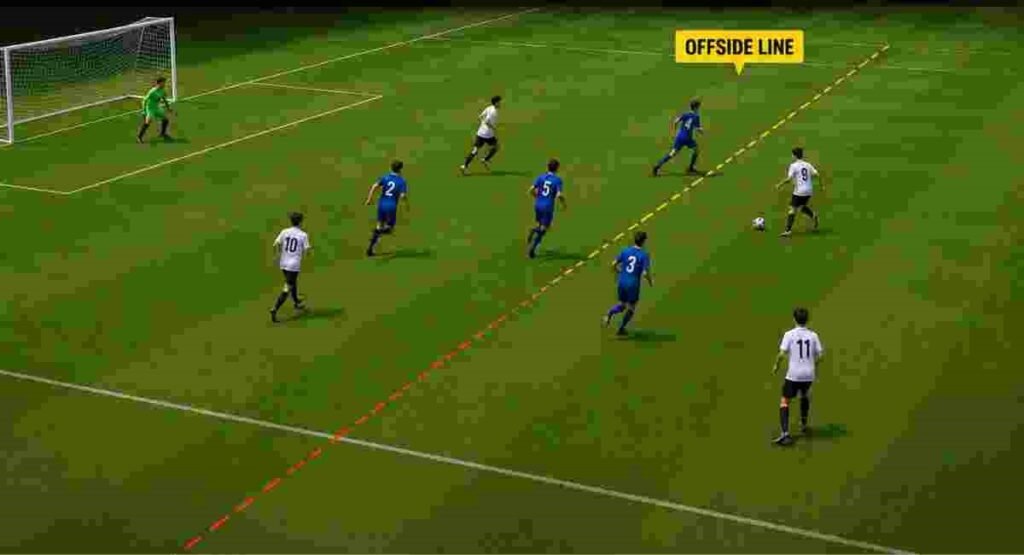
One of the best aspects of this youth rule is how it changes the normal offside law and makes the game a lot more realistic and easier for young forwards to understand.
A. THE MIDFIELD LINE IS NOT THE GATE
In the adult full-field version of soccer, a player may never be called offside for standing in his own half of the field, as the halfway line serves as the principal boundary. But the standard midfield line is not taken into account at all with offsides in 7v7 youth games. Rather, the attacking team’s soccer build out line is the actual line for the enforcement of offside.
B. WHAT DOES THIS MEAN FOR FORWARDS?
An attacking forward can be significantly beyond the midfield line and still never have to worry about an offside whistle. They are offside checked only if they are behind the opposing team’s soccer build out line when the ball is played to them. This brilliant tweak forces teams to open the field up and creates breathless breakaway plays and prevents defending sides from just relying on cheap offside traps to shut down the pace of the game.
6. COACHING TIP: HOW TO COACH THIS RULE WITH YOUTH PLAYERS
For youth soccer coaches, it is the effective application of those unique markings during the midweek workouts that makes for a polished, confident squad.
A. TEACH DEFENDERS TO SPLIT WIDE
Once the goalie has the ball and the opponents are back behind the soccer build out line, coaches need to get their two main defenders to split wide on the left and right sidelines. By retreating deep into the soccer build out line area, these defenders make an optimal passing angle, making it extremely hard for the opposing forwards to steal the ball when they are permitted to race forward.
B. PROMOTING COGNITIVE SCANNING HABITS
Coaches should tell them to get their head up and see the field before they get the ball. Midfielders should be taught how to descend into the space directly above the soccer build out line to serve as an outlet if the defenders become bottled up along the sidelines. This develops fast decision-making that will greatly benefit these young athletes as they move on to larger playing grids.
7. PARENTAL EDUCATION: HOW TO FOLLOW A 7V7 GAME AND NOT BE BAFFLED

Parents on the sidelines can be infuriated when a referee blows their whistle for infractions that they don’t even understand. Watching the game through the lens of this system is what makes playing so much fun.
A. WHY THE REFEREE APPEARS TO SLOW DOWN THE GAME
Now if the keeper tosses the ball up before the opponents have completed retreating behind the build out line, then they are giving THEIR teammates a tremendous disadvantage. The ref will often err on the side of raising his/her hand to delay the play deliberately for the opponents to be fully away from that area before the game is allowed to continue.
B. PROMOTING THE JOURNEY RATHER THAN THE SCOREBOARD
When a defender slips and accidentally turns the ball over in their own half and the https://cricproz.com/soccer-vs-football-fifa-2026-guide/ other team scores, parents shouldn’t scream and freak out. The whole point of the soccer build out line is to let the kids learn how to pass out of the back. Praise the keeper and the defenders for making an effort to pass intelligently, because learning how to play this way is a hell of a lot more important for their long-term development than winning some random U9 weekend tournament.
CONCLUSION:
At its essence, the soccer build out line is one of the best teaching tools ever brought to youth sports. It shields little kids from intense defensive pressure traps, does away with old-school kick-and-run strategies, and turns the field into a real tactical learning zone.
If you’re a coach sketching out plays on a clipboard, a parent rooting from a lawn chair, or a young player figuring out how to receive a short pass, embracing the soccer build out line concept is a major step in the path to mastery of the beautiful game. By prioritizing intelligent possession rather than rapid clearance kicks, grassroots soccer develops confident, smart, and technically superior players that will be able to take on sizable fields in the years to come FIFA Youth Academy Technical Regulations Hub.
Frequently Asked Questions (FAQs)
Q1. Can a goalkeeper decide to play the ball quickly before the opponents have retreated?
Answer: Yes. The goalkeeper may take a quick throw or pass, but the other team must be all the way back behind the build-out line. That being said, they take their chances; they may have an opponent immediately on top of them looking to steal the ball.
Q2. What if an opposing forward does not move behind the build-out line?
Answer: Any player who intentionally remains inside the zone to interfere with the passing lane or who refuses to observe the soccer build out line after being warned by the referee will have his or her presence in that zone nullified by jumping the ball, and if the referee believes he/she is taking advantage of the situation, he/she may warn him/her about further penalties.
Q3. Is the build out line rule in effect for U11 or U12 games?
Answer: No. When we hit U11 and they progress to the 9v9 game, they take the soccer build out line out completely. After that, the players are introduced to regular FIFA rules, meaning goalkeepers can punt and offsides are determined from the midline as usual.
Q4. LG, can a goalkeeper score a goal directly by throwing the ball over the line?
Answer: If a keeper can throw the soccer build out line ball past the soccer build out line, then a kid can throw a ball all the way into the opponent’s net from his own penalty box. If for some reason it scores, it counts, but it’s so rare.
Q5. Is a goal kick from the penalty box or from the build-out line?
Answer: Goal kicks are taken from within the normal area of the penalty box still. The build out line in soccer is the line that the opposing team must stand behind until the kicker kicks the ball.
Q6. May a defender go beyond the build-out line to take a short pass?
Answer: Absolutely. Defender players can be wherever they want in their half of the pitch: inside their own penalty box or on the soccer build out line itself, all to aid their keeper in his safe ball distribution.
Q7. What if a kicked ball clears the build-out line without touching the ground?
Answer: Punting is illegal no matter how far the ball goes. And even if a big punt is taken by a goalkeeper, sailing over the soccer build out line at the halfway mark and landing in the opposing half, the referee will blow the whistle long before the ball rolls to a sudden stop.
Q8. How can tournament directors mark them if there is no paint?
Answer: If using a multi-field complex that does not have a permanent paint for the soccer build out line, directors may use highly visible, flat plastic cones on the left and right touchlines to define the exact boundaries for clear visual guidance for the players and refs.
Q9. Can an attacker be offside between the half line and the build-out line?
Answer. A player in an attacking position shall not be considered offside if he is between the center midfield line and the opposing team’s build-out line. They’re completely offside-proof in that middle pocket of space.
Q10. Will this change the way corner kicks are taken?
Answer: The soccer build out line has no bearing on corner kicks, throw-ins, or direct kicks to the penalty area. Those set pieces operate under standard, classic soccer rules without modifications.