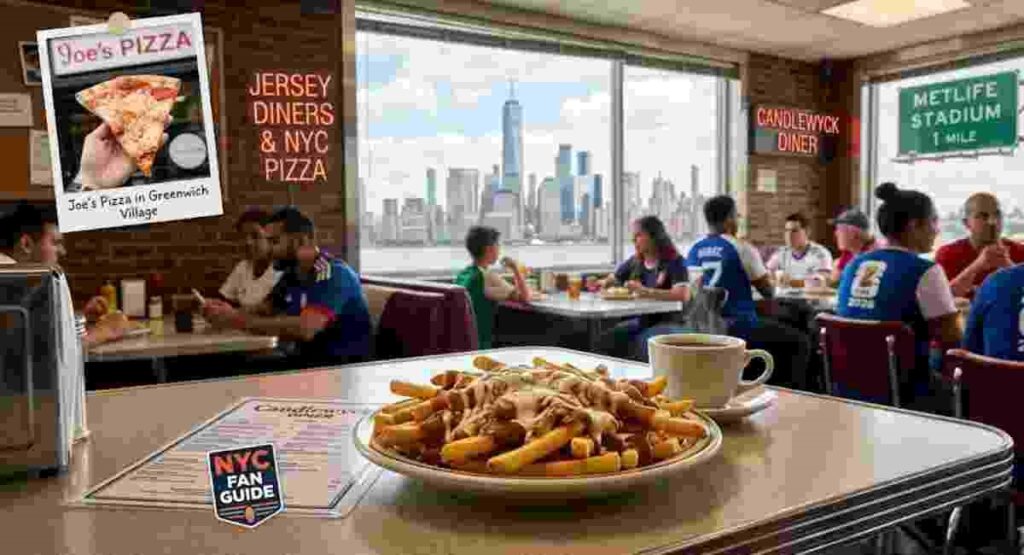
With the world preparing to move for a massive sporting event, global travelers are learning that coming to the U.S. means more than just a passport. It’s not just that there are cultural wars—soccer vs football, etc. But in New York, Dallas, or L.A., so many people are confused when they see “football” actually means NFL, a game played with helmets and thick pads.
Knowing the difference between soccer and football is important for fans who don’t want to show up at the wrong stadium or put on the gear of the wrong team. This isn’t simply a naming debate; the soccer vs football lexicon defines the essence of United States sports culture. If you’re landing in the States for the FIFA World Cup, learning the soccer vs football lingo is your first step to blending in like one of the gangs. Here’s how to resolve the soccer vs. football dispute so you can have a truly legendary trip in 2026.
The 2026 tournament isn’t just about the matches; it’s about the massive entertainment events. For all the details on the big kickoff, visit our https://cricproz.com/fifa-2026-opening-ceremony-guide/ to see the performers and stadium schedule.
Table of Contents
1. THE GREAT LINGUISTIC DIVIDE: WHY AMERICANS SAY SOCCER
The most common question from foreigners is, “Why do Americans call the world’s most popular sport ‘soccer’?” To get a bead on the soccer vs football debate, you have to travel back to 19th-century England. The term “soccer” is in fact an English one, albeit now archaic, derived from “association football.”
While the rest of the world later just decided on “football,” we in the United States held on to “soccer vs football” to separate it from “gridiron football,” which was developing into the premier sport we now know as today’s NFL.
In 2026, a tourist uttering the word “football” at a sports bar probably will generate a discussion about quarterbacks and touchdowns — not strikers and goals. Knowing this is rule one when it comes to surviving the American sports culture. To understand the origins of the word ‘soccer,’ you can explore the Etymology of Association Football on Wikipedia for a deeper historical dive.
2. THE GRIDIRON VS. THE PITCH: HERE’S HOW THEY HANDLE THE PHYSICALITY
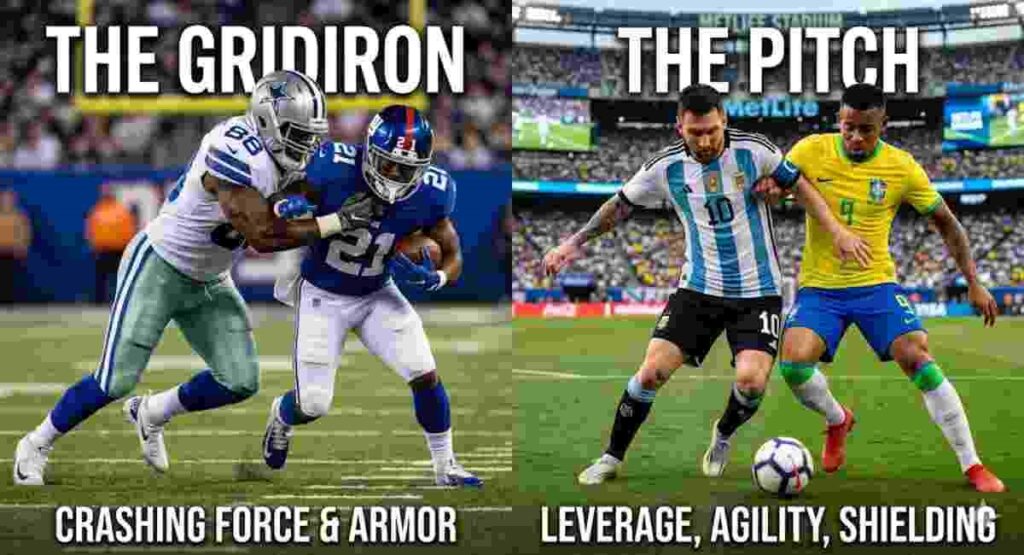
Soccer vs football: The biggest difference between soccer vs football is that they have different equipment, and the style is much more physical.
American Football (NFL): The players are laden with massive plastic helmets, shoulder pads, and thigh pads. It’s a game of repeated explosive collisions,” said Quinton Franklin, a former defensive lineman.
Soccer (FIFA): Jerseys, shorts, and shin guards are lightweight, and maximum ventilation is allowed. It’s all about stamina, flexibility, and non-stop movement.
In U.S. football, the game is one of territory, counted in yards. “soccer vs football” is a game of flow that’s counted in goals. If you see a stadium sign that reads “Football Equipment,” take a second look at the logo—they might be selling 10-pound helmets rather than the featherweight kits you were hoping for.
3. THE “TAILGATE” TRADITION: AN AMERICAN PRE-GAME FESTIVITY
On soccer vs football culture: you can’t leave out the parking lot. Fans typically march together or go to local pubs in Europe or South America. The party, in an American way, is in the back of a truck in the U.S. Get “tailgating” and get beef. Fans show up 5 hours early to set up makeshift emporiums of BBQ with portable grills.
Even if you’re just there for a FIFA match, the locals will be acting as if it’s an NFL Sunday. If you want to make it through the soccer vs football culture shock, take some cold drinks to a stadium parking lot in Kansas City or Dallas—you’ll be invited to a BBQ in no time.
4. THE CLOCK PROBLEM: CONTINUOUS PLAY VS. STOP-START PLAY
Perhaps the most confusing aspect when comparing soccer and football is the use of time. The international fans are accustomed to the “running clock”—90 minutes of continuous play with only a brief intermission at the half. But American “football” is stop-and-go.
There is a whistle for every foul, incomplete pass, or timeout. That’s why a 60-minute NFL game takes almost 4 hours! For the 2026 World Cup, Americans are beginning to respect the 90-minute dash, but don’t be surprised if your American seatmate expects a commercial break every ten minutes.
5. WHY THEY MAKE THE NFL EVERY TOWN’S GAME FIRST:
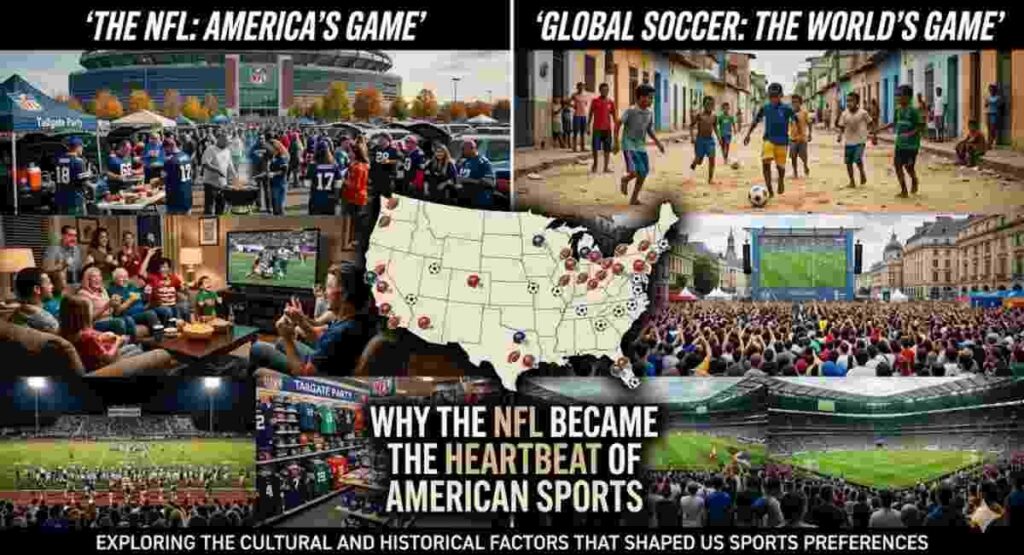
Nearly all of the 2026 World Cup stadiums were built for the NFL. That matters greatly in the soccer game experience. These “Gridiron Cathedrals,” like the Mercedes-Benz Stadium in Atlanta or the NRG Stadium in Houston, are built for American football sight lines. If you are heading to the East Coast, keep in mind that New York’s primary venue is unique. Make sure to read our https://cricproz.com/nyc-fan-guide-fifa-2026-metlife-stadium/ to learn about transport, seating, and local fan zones.
The seats are steep and the atmosphere is loud. Though FIFA is bringing in natural grass for the tournament, the “heart” of these venues is American football. Know how to make sense of this, and it will help you as you wander the massive concourses and high-tech fan zones that are far larger than most European soccer stadiums.
6. THE RISE OF “SOCCER” IN THE LAND OF “THE NFL”:
There is a myth that Americans do not care for the world game, it is completely untrue. “Soccer vs football” may be a linguistic divide, but it looks like the U.S. is finally becoming a soccer powerhouse.
Between the “Messi Effect” in Miami and MLS clubs drawing massive crowds, the gap is closing. By the time 2026 comes around most Americans already will be “dual fans”—spending their Saturdays watching the Premier League, and their Sundays rooting for the NFL.
7. STADIUM SLANG: TALKING LIKE A LOCAL FAN
To really get a handle on soccer vs football lingo, you’ll have to make some swaps. Ask for a “pitch” and you might get a curious look as if you were talking baseball. Here are some of the Americanized terms: Securing tickets requires a reliable payment method that works across borders. We recommend checking out the https://cricproz.com/7-best-virtual-debit-cards-fifa-2026-tickets/ to avoid transaction failures during the high-pressure booking window.
The Field: For ‘The Pitch.’
The Uniform/Jersey: The kit, but make it a jersey.
Cleats: They have boots; we have cleats.
The Game: In place of ‘The Match.’
Zero “The” Nil: (e.g., “The score is two-zero”). “NIL”
8. THE SPECTACLE VS. THE SPORT:
In American culture, it’s what goes on during the game, not just the game itself, that’s so entertaining. soccer vs football, yes, but we want a “show.” Prepare for halftime acts and loud music at every stoppage of play, as well as “Kiss Cams” on the big video boards. Classic soccer purists may decry that this is a distraction, but it’s all part of the high-octane feel that makes U.S. host cities so special. Embrace the noise—it’s the American way!
9. THE “SEASON TICKET” OBSESSION: LOYALTY IN SOCCER VS FOOTBALL
American sports culture revolves heavily around “season tickets.” Is it soccer or football? While football pride is something that everyone has, Londonderry locals are massively prouder of their long-term seat ownership. In the NFL, these are occasionally handed down through the family.
For the 2026 World Cup, just know that while these may be momentary soccer fans, they will have that same “die-hard” energy. They don’t just watch a game; they live it. If you’re in the seat next to a local in Seattle or Philadelphia, they’ll tell you the stadium’s entire history—they’ve got a personal connection to the concrete and steel of these “football” arenas.
10. ALCOHOL RULES AND THE “DRY” STADIUM MYTH:
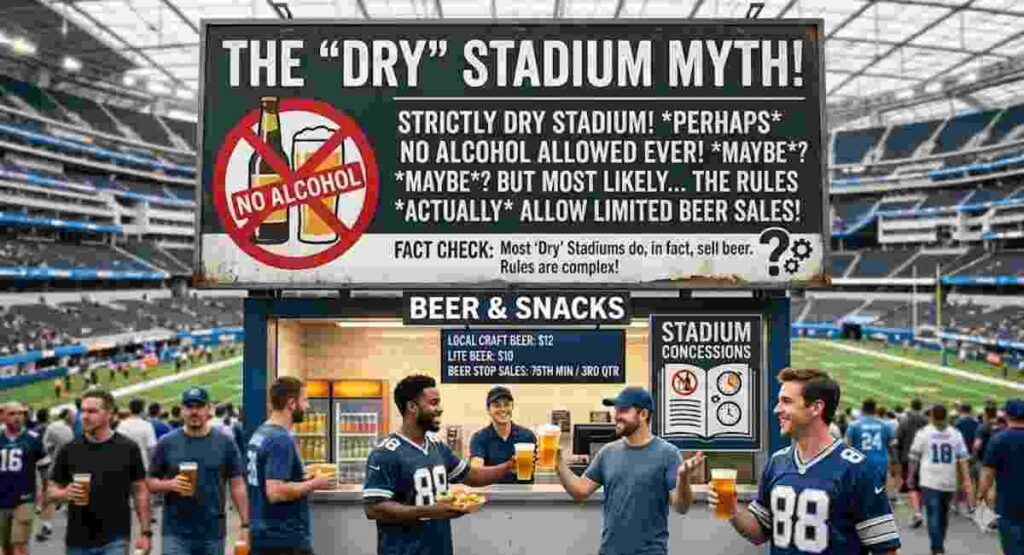
Among the confusions of international fans entering the world of soccer vs football is the “tailgate” vs. “in-stadium” drinking regulations. You can drink as much as you want in the parking lot (tailgating), but some US areas or certain match days may impose more rules inside.
Yet, most NFL-turned-FIFA stadiums feature huge beer gardens and craft breweries right on the concourses. Just a heads-up: they almost all tend to stop selling alcohol on around the 75th minute of a soccer match (or the 3rd quarter of a football game, in case you’re in the US). This is a precaution to make sure everyone is sober enough to find their car afterwards!
11. THE “HALFTIME” RUSH: SNACKS, NOT JUST ANALYSIS
In world soccer at halftime, it’s talking about the referee’s errors, about tactical adjustments. In the soccer-vs-football confusion that is America, halftime is a “Sprinting Event” to the concession stands. Americans relish their ballpark fare — from giant pretzels and loaded nachos to “footlong” hot dogs. While you’re traveling between host cities, you can save a lot of money on souvenirs and electronics. Don’t miss our guide on https://cricproz.com/fifa-2026-tax-free-shopping/ to find out which states offer the best deals for international tourists.
Games are really long, and with so many breaks in NFL games, Americans eat all the time during events. For the 90-minute sprint that is soccer, the halftime is transformed into a frenzy, a cooking mad dash to get food. If you want a snack, leave 2 minutes before the whistle, or you’ll be queueing a whole half-time!
12. “CLEAR BAG” POLICIES: A UNIFIED SECURITY STANDARD
Soccer vs football, the security policies in the USA are the same. Most international fans are accustomed to carrying backpacks to the stadium, but in the U.S., the “Clear Bag Policy” reigns. If your bag is not a clear plastic one and meets the modest size requirements, you won’t be able to take it in.
It’s borrowed straight from the NFL and it’s the norm to keep lines moving quickly. Don’t get too distracted by the soccer vs football naming debate – this is the only rule that can genuinely wreck your match day if you fail to observe it. Before heading to the stadium, make sure your bag complies with the official NFL All-Stadium Clear Bag Policy which FIFA will also enforce during the tournament.
13. TICKET RESALE CULTURE: THE “SECONDARY MARKET” BEAST
Ticket reselling is frowned upon or illegal in many countries. In the U.S., it is a huge, legalized industry. Soccer vs football: Platforms like Ticketmaster and StubHub are where all the action is. Prices will be all over the place depending on who is playing.
For 2026, Americans will have to consider soccer tickets as “gold.” If a big side like Argentina or England is in town, watch the “football” fans transform into “businessmen,” peddling tickets for thousands. It’s a brutal aspect of American sports culture every traveler must know.
14. THE “NATIONAL ANTHEM” PROTOCOL:
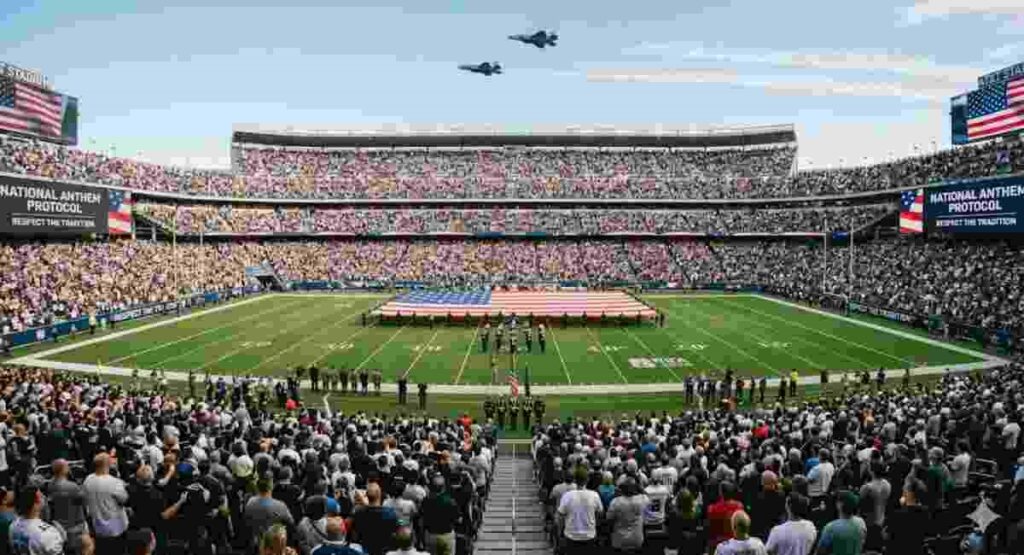
Before every “football” game and “soccer” match in the U.S., there is a halt for the national anthem. Fans beyond the U.S. may find it a bit more heated than they are accustomed to at home. In the soccer vs football climate, this is a jingoistic moment. They stand, remove their hats, and place their hands over their hearts. Sometimes, there’s even a “flyover” with jets from the military. It’s a well-produced spectacle that foreshadows the entire day. For official match schedules and fan rules, always visit the FIFA Official World Cup 2026 Portal to stay updated on game-day protocols.
CONCLUSION:
The debate over soccer vs football might never really conclude, and quite frankly, it shouldn’t. This linguistic fracture is part of what gives us such a bizarre sports culture in the U.S. As you gear up for the FIFA World Cup 2026, keep in mind that the players may be different, but the excitement and passion for the game are universal.
Pitch or field, even when you’re debating soccer vs football in between mouthfuls of burger at the tailgate, you are living in an age that will be looked back on for how American spectacle and global tradition met. The U.S. is ready to show that its own “soccer vs football” cathedrals are the ideal venue for the world’s premier “soccer” tournament. So, gather up your clear bags, put on your jersey, and buckle up — because in 2026, the soccer vs football debate is going to be a lot less important than the roar when the first goal is scored.
Frequently Asked Questions (FAQs)
Q1. Am I insulting Americans by calling it “football” and not “soccer?”
Ans: Not at all! 99% of Americans know (or at least understand) that the rest of the world calls it football. But if you’re in a sports bar, you might want to specify soccer vs. football just to be clear, so they don’t think you’re referring to the NFL.
Q2. Is the “Clear Bag Policy” obligatory for all FIFA 2026 games?
Ans: Yes. These games are played in NFL stadiums, so they have the full American football treatment when it comes to security. Always double-check your particular stadium, but a clear plastic bag is almost always the way in.
Q3. Is it possible to purchase a “football” top at the World Cup stadium?
Ans: Be careful! If you ask for a “football” shirt, you might be handed an NFL shirt that’s more like a uniform with space for shoulder pads. When ordering, always add “Soccer Jersey” to be sure you get the correct apparel for the 2026 tournament.
Q4. What Americans are tailgating for soccer?
Ans: Tailgating: It’s an American “football” tradition that has infiltrated literally every other sport. It’s the classic pre-gaming with barbecue and drinks in a parking lot and probably the best way to take in the local culture.
Q5. Are American stadiums “cashless”?
Ans: Yes, all or virtually all of the FIFA 2026 game venues are fully cashless. Whether you’re purchasing soccer vs football gear or just a hot dog, you’ll need a credit card or a digital wallet such as Apple Pay.
Q6. Is there “stoppage time” in American football?
Ans: No. soccer vs football times are very different. The clocks stop completely in the NFL for penalties, while soccer utilizes “added time,” which the clock continues to run during.
Q7. What should I wear to a match in 2026?
Ans: Look at the local weather! Summer in Dallas or Miami is no picnic. Soccer vs football fashion may vary, but comfort is number one. Dress in breathable jerseys and pack some sunscreen for those stadiums without roofs.
Q8. Will the “football” stadiums be modified for the World Cup?
Ans: Yes. FIFA mandates natural grass for all games. Several NFL stadiums that are accustomed to artificial turf are shelling out millions to lay down temporary natural grass fields—just for the 2026 crowd.
Q9: Is it okay if I use “Nil” while talking about the score in the USA?
Ans: You may, but most people will just say “Zero.” If the score is 1-0, an American fan will call out “One to Zero.” You’ve got to be kidding—using the word “nil” is a dead giveaway you are not an American and actually a quick way to indicate you are an international fan!
Q10: What explains the league’s vast U.S. popularity gap with the rest of the world’s most popular sport?
Ans: The NFL is deeply rooted in American schools and colleges, and its history spans more than 100 years. Still, the soccer vs football divide is rapidly narrowing, with soccer fast emerging as the country’s most popular sport among younger generations and international residents.