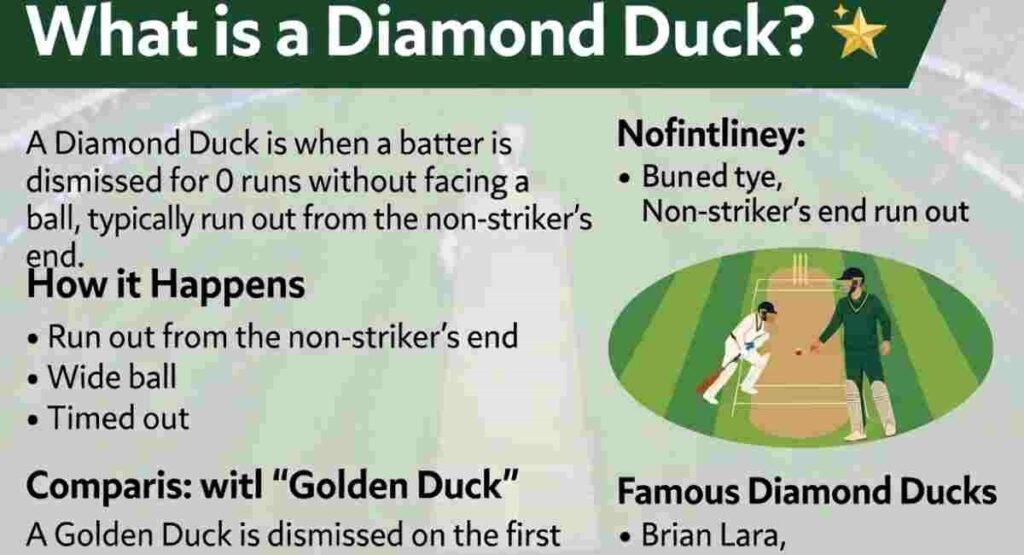
Stepping outside the crease to play a delivery brings immediate pressure, but nothing is quite the same as the complete horror of getting out for a diamond duck in cricket. All of them want to lead their team to a comfortable victory, but this game is so merciless it throws them out one after the other, sometimes even before they could get a good start. The term “diamond duck” perfectly embodies that end-all-be-all moment of your dreams getting shattered on the field, leaving athletes completely bewildered while they watch their team come crumbling down.
The usual means of getting out, whereby you get to play a few balls, study the conditions of the pitch, or protect yourself from a delivery, are a mere nothing when compared to a diamond duck in cricket, which stops your entire inning abruptly before you might even show what you are capable of doing. Developers who want wider database options alongside structured developer documentation should also explore our curated list at https://cricproz.com/free-cricket-apis/.
In terms of number, it is an outstandingly rare sight to see a diamond duck in cricket, and this leaves it as an extremely captivating mystery to the sports historians and data analysts. Getting out for a diamond duck in cricket is the most unfortunate outcome a batsman can have, sending him on the long, silent walk back to the pavilion without even having faced a single legitimate delivery.
Table of Contents
1. WHAT IS A DIAMOND DUCK IN CRICKET?
A. THE CORE PARLANCE DEFINITION
Cricket does its slang a little differently from other sports, and the term “diamond duck in cricket” is a flawless example. But it doesn’t end there: it’s divided up into how long you actually lasted at the crease in balls. Getting out on your very first ball gives you a golden duck, while lasting until the second or third brings a silver or bronze duck.
But to fall prey to a “diamond duck” in cricket is heartbreak to an extent unimagined. This is exactly the nightmare where a batsman is out not having faced a single legal delivery from the bowler. It’s the ultimate statistical nightmare: taking zero runs from zero balls. Walking back into the dressing room after a defeat is pure torture because you were never given a genuine opportunity to test your luck or open your account of runs, really.
B. LEGAL RECOGNITION VS. POPULAR JARGON
Should you spend a moment to browse through the official Laws of Cricket as penned down by the MCC, you will realize that “diamond duck” is not an official cricket term. On the scorecard of a legitimate international match, such dismissals are simply recorded under normal categories like “Run Out” or the infrequent “Timed Out,” and they appear right next to a disheartening line of 0 runs off 0 balls. You can check out the official playing rules and terminology directly on the official Lord’s MCC Laws of Cricket website.
Even as a throwaway term to use informally, the phrase “diamond duck” is used constantly by cricket fans on Twitter, sports bloggers, and TV commentators during live broadcasts. It’s now the ultimate shorthand to signify a freak, unparalleled run of bad luck. And everyone at the stadium knows immediately the sheer drama of the moment as it flashes on the jumbotron.
2. HOW A DIAMOND DUCK OCCURS: THE OFFICIAL RULES
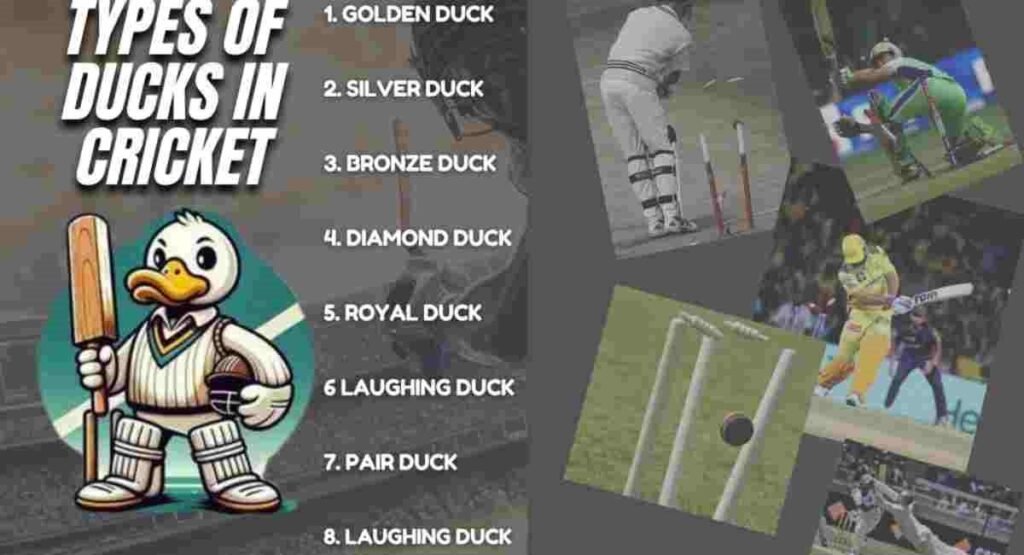
But the truth is, there are a handful of very unusual, chaotic ways that a player can get themselves out before they even face a legal pitch.
A. RUNNING OUT THE BATSMAN TO WIN THE MATCH
The striker plays the ball and panics—and calls for a risky single. A direct hit on the stumps, by a deft throw from a fielder, before the non-striker makes it across is also an out. Yet another controversial way to get a wicket on this end is the “Mankad” dismissal—named after Indian cricketer Vinoo Mankad—when the bowler runs out the non-striker for backing up too far before the delivery is let go.
In both opportunities, a player is dismissed without having the chance to bat, and thus it explains why the wicket is the main reason for a diamond duck in cricket. For a deeper breakdown of how the game’s governing body regulates unusual dismissals and pace of play, read our https://cricproz.com/icc-stop-clock-rule-2026/.
B. RUNNING OUT THE STRIKER ON A WIDE OR NO BALL
But what if the batsman is playing on strike? It can still happen. If a batsman comes for their first ball and the bowler bowls an illegal delivery, such as a huge wide, that delivery isn’t accounted to the batsman for the number of balls in his innings on the scorecard. If the batsman turns to take a run on that wide ball and ends up getting run out by the fielding side, he would have faced zero legal balls as per records. This kind of technicality turns a routine extra into an earth-shattering one. It’s a painful place to become, where a bowler’s misjudgment inadvertently leads to a diamond duck in cricket.
3. STUMPED OFF A WIDE DELIVERY
Stumpings with standard wickets happen off legitimate balls (which count as balls faced by the batsman), but then the strange stuff starts happening if the bowler hurls a wide leg-side on a fresh batsman’s first-up delivery option. If the batter walks out of their crease, is off-balance, and the wicketkeeper removes the bails quickly, the umpire will call “stumped.” Since a wide is an illegal ball, it is not added to the balls faced by the batsman and hence results in an instantaneous diamond duck in cricket.
A. THE NOTORIOUS “TIMED OUT” DISMISSAL
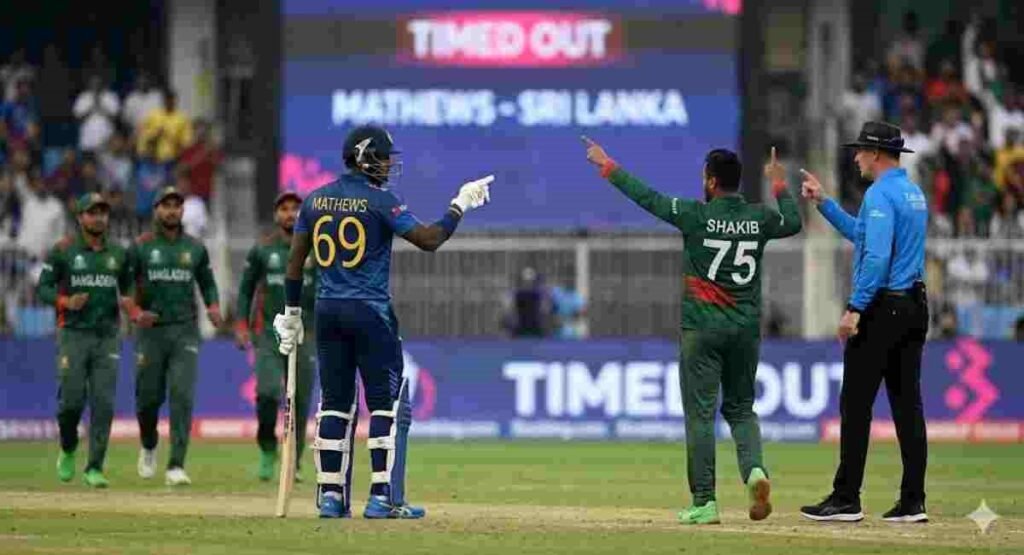
As per the ICC playing conditions, the next batsman shall have a very limited time (in most cases 2 to 3 minutes based on the format) to arrive at the crease once a wicket has fallen. If the replacing batsman is delayed by broken equipment, field confusion, or any other cause, the captain of the fielding team can appeal for a “Timed Out” dismissal. Since no delivery was ever bowled, the batsman is awarded a “diamond duck” in cricket. Modern matches are increasingly shaped by automated tech timers and digital tracking. See how technology is reshaping these decisions in https://cricproz.com/cricket-evolution-2026-new-rules-tech/.
B. RUNNINGS ON THE FIELD BEFORE AT BAT
It is an extraordinarily unusual and very tense moment. It takes place when the incoming batsman impedes the fielding side in getting ready to bowl at him. Such as if the striker purposely kicks the ball away to prevent a run-out or a fielder’s throw or physically obstructs a fielder when he is about to throw, the umpire can remove him from the game for obstructing the field. This instant disciplinary action changes a frenzied moment into an official “duck” in cricket. To see his complete career statistics and match records, you can visit the official ESPNcricinfo Angelo Mathews Profile.
4. THE HISTORY OF “DUCK” IN CRICKET
A. THE ORIGINS IN THE NINETEENTH CENTURY
So, if that’s how we came to use that term, how did we come to use this one? “Diamond duck” and other such terms sound pretty funny, even now. WHY “DUCK” cricket came and went in the winter before the panic started.
The Prince of Wales, later Edward VII, was playing a game and was dismissed for a duck. The prince “retired to the royal pavilion on a ‘duck’s egg,'” said a local newspaper. Since the number zero looked like an egg, the public certainly liked the phrase, and they gradually truncated it to “duck.”
So as cricket began to professionalize, and fans and scribes began to want particular words for different kinds of zero, the “diamond duck” was born. Today, the Diamond Duck in Cricket stands head and shoulders above this scale of ill fate of all time.
B. ANALYSES IN VARIOUS FORMATS
A batsman plays very differently and has very different probabilities for getting out in different formats. The likelihood of a batsman getting a diamond duck in cricket varies significantly across formats of the game. The speed and danger of the game determine the occurrence rates of these freak deaths.
A simple look at the numbers for a notice of concern tells the analysts: the risk increases with the format. The endless pressure of short games is what takes so many wickets in cricket, and this is much more likely to see a diamond duck on the big screen. If you are interested in how professionals break down these complex match statistics and numbers for a living, check out our guide on https://cricproz.com/cricket-data-analytics-jobs-2026/.
5. TEST CRICKET: WHAT A RARITY!
In the slow, deliberate realm of Test cricket, a diamond duck appears as if it were a phenomenal outlier. As staying alive is the game plan, batsmen are playing risk-free cricket and asking for singles with the utmost caution. Historical evidence suggests fewer than 30 we have ever seen, so a clean diamond duck in Test cricket is about once every 80-100 games. This rarity of a concept makes “diamond duck” in cricket a historic shocker when it crops up in red-ball cricket. Walking back after getting ready for a tough five-day Test is a huge mental blow.
A. ONE DAY INTERNATIONALS (ODIS): CRANKING UP THE PRESSURE
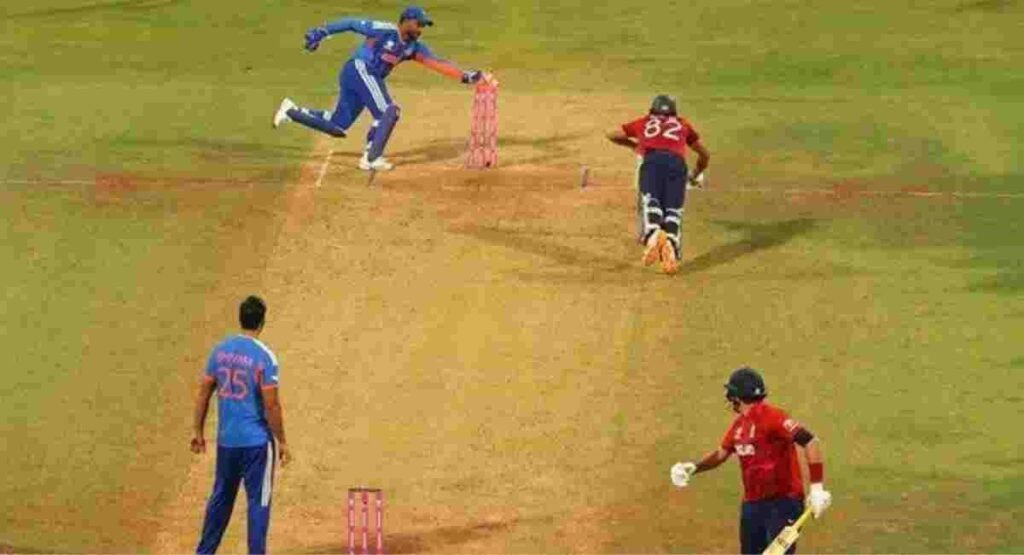
When you get to play the 50-over version, the pace of the game picks up, and so do the errors. Catching up with the changing required run rates each over, teams are prompted to bring out singles, in particular in the middle and death overs. Diamond ducks have been singled out. There are in excess of 150 occurrences of diamond ducks in ODI cricket. The dramatic increase in count clearly indicates that the data row for a diamond duck in cricket climbs the ladder as formatting rules for sports scenarios add a rewarding mentality of aggressive running.
B. TWENTY20 INTERNATIONALS (T20IS) & FRANCHISE LEAGUES
In a 20-over game, every ball is a battle, and tail-enders need to give away their wickets in order to just buy a single. Since non-strikers leave their crease early to get a lead start, they are very vulnerable to direct hits and clever fielding. It is for this reason that diamond ducks are witnessed more frequently in modern franchise leagues of cricket. The frantic, high-octane nature of T20s has made the diamond duck in cricket a more regular risk. Analysts often use advanced computational modeling to map out these high-risk T20 match situations. Explore https://cricproz.com/ai-prediction-tool-cricket-2026/ to see how these patterns are calculated.
CONCLUSION:
After all, a diamond duck belongs to those unwelcome “extremes of cricket” phenomena, such as being run out at the non-striker’s end without a single run to your name or getting run out by a catapult passer, that come closest to slapping you in the face and snatching your breath in this particular sport. It’s a rude reminder that cricket is a game predicated on teamwork and split-second communication, where your fate as an individual can be dictated by your partner freaking out or a piece of fielding off the wall.
From traditional non-striker run-outs to cutting-edge World Cup drama, this dismissal has brought incredible layers of excitement, humor, and statistical wonder to the game. It confirms that in this wonderful game, fortune can turn up even before a ball is delivered—before a ball has even been officially bowled.
Frequently Asked Questions (FAQs)
Q1. HOW IS A GOLDEN DUCK DIFFERENT FROM A DIAMOND DUCK?
Answer: See, it’s whether you faced a ball or not. You get a golden diamond duck in cricket when you stand on strike and you get out on your first legal bail. But a diamond duck in cricket? That is just bad luck. You walk away without even facing a single legal delivery. Your score is a big fat zero from zero balls faced.
Q2. IS IT POSSIBLE TO GET A DIAMOND DUCK ON STRIKER’S END?
Answer: Say you are on strike for your first ball and the bowler bowls a wide diamond duck in cricket. That’s not a real ball face. But if you run on that wide anyway and the fielder runs you out? Boom. You just got a diamond duck in cricket, because your official ball count remains at nil.
Q3. IS A STUMPING OFF A WIDE DIAMOND DUCK?
Answer: It seems strange, but yes. If a bowler bowls a wide down the leg side on your maiden ball, it’s a dead ball as far as your personal stats are concerned. But if you pop your foot out, lose your balance, diamond duck in cricket and the keeper whips the bails off, you get stumped. No legal ball faced, so it is a diamond duck in cricket.
Q4. HOW DOES “TIMED OUT” CAUSE A DIAMOND DUCK?
Answer: This one is on the clock. Under the ICC rules the new batsman is given a stringent time frame to be ready. If you’re fiddling with your pads or helmet and taking too long, the fielding captain may appeal. The umpire sends you off right there. No balls have been bowled; no runs have been scored—an immediate administrative “diamond duck” in cricket.
Q5. WHO SUFFERED A CELEBRATED TIMED-OUT DIAMOND DUCK?
Answer: Recall that absolute disaster with Sri Lanka’s Angelo Mathews vs Bangladesh some years back. He had literally just walked out to bat, but his helmet strap broke right there. Rather than stand by, time ran out on him while he was getting dressed. Bangladesh made a huge appeal, the umpires referred to the rulebook, and boom—he was sent packing.
Q6. WHY IS IT CALLED A DIAMOND DUCK?
Answer: At some point warm-up singles were beginning to represent gold and silver for fast outs. Since the rarest and unluckiest zero you could get is the one where you get out without facing a ball, that zero is called a “diamond duck” in cricket.
Q7. HOW CAN PLAYERS AVOID A DIAMOND DUCK?
Answer: More “Louder yelling” Just most of these needs come when there is terror among us. You should have clear calls like “NO” or “WAIT” and not just nod your head. Also don’t go hunting for crazy singles before you have even faced a ball, and you won’t have to worry about getting a diamond duck in cricket.
Q8. DO DIAMOND DUCKS OCCUR IN T20 LEAGUES SUCH AS IPL & PSL?
Answer: Oh, everywhere. T20 is just too fast. Everyone is eager to take a run, especially in the last few balls. Since non-strikers leave their crease way too early to get a head start, they are always getting caught short by direct hits. That is why T20 is a great scape for a diamond duck in cricket.
Q9. CAN OBSTRUCTION OF THE FIELD CAUSE A DIAMOND DUCK?
Answer: Yes, if you lose your cool. If you have just walked out to the non-striker’s end and are inclined to kick the ball away from a fielder or physically obstruct their throw before taking strike, you are in trouble. You will be given out for obstruction by the umpire and will be forced to field with one less player as you get a diamond duck in cricket off your hat.
Q10. WHAT FILD STRATEGIES PRODUCE A DIAMOND DUCK?
Answer: Captain Sean loves to strangle new batsman. Bring the whole infield closer to ring the new batsman in. This makes the guy on strike hit blindly and make a bad call. The fielders can get a quick return throw to the non-striker’s end to take out the new guy sleeping and get a diamond duck in cricket.