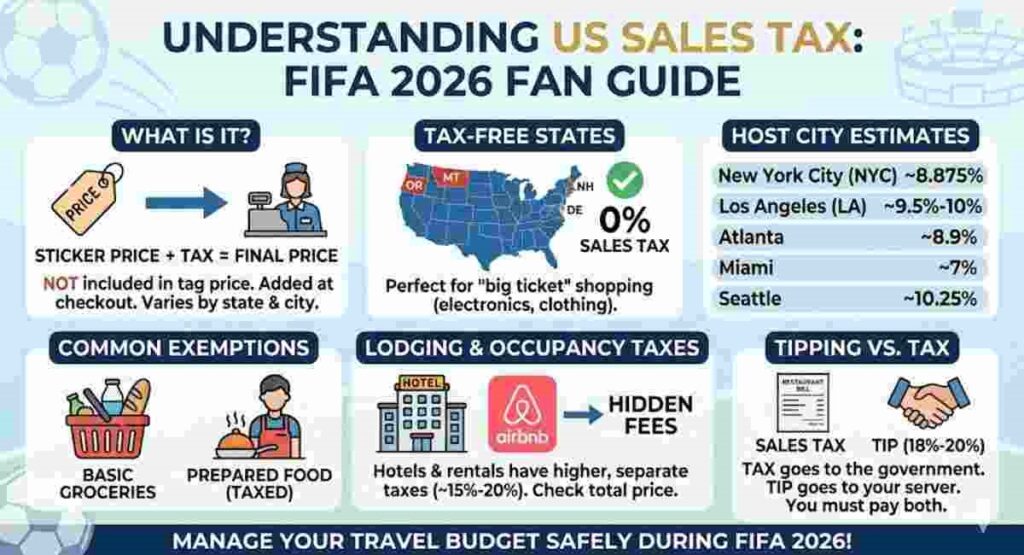
When it comes to planning your World Cup trip, you’ll want to account for US sales tax. Most foreign fans enter a store, look at a price tag, and are confused when they get to the register and learn about the US sales tax. In the US the price on the tag is almost never the final price because of sales tax. US sales tax will be added onto your total at the end of your transaction, whether you’re buying a jersey or a soda.
Make Sense of the US Sales Tax So, in order to better manage your travel budget, you need to know how US sales tax works. This article has all you need to know about US sales tax to fend off any surprise at the register in the 2026 FIFA.
Table of Contents
1. WHY THE PRICE ON THE TAG IS “LYING” TO YOU
In many countries throughout Europe, Asia, and South America, the price you see on a product already includes Value Added Tax (VAT). In America, it’s not the same. The “sticker price” is just the retail price—what the store wants for the item. The government’s share, called the US Sales Tax, is only computed when you are at the checkout, in the cashier’s line.
Why do they do this? Because sales tax in the US is not unified, but rather there are a lot of different taxes in the different states. It changes from block to block, so packaging can’t display a single “all-in”” price.
2. A SHOPPER’S PARADISE: NO SALES TAX STATES
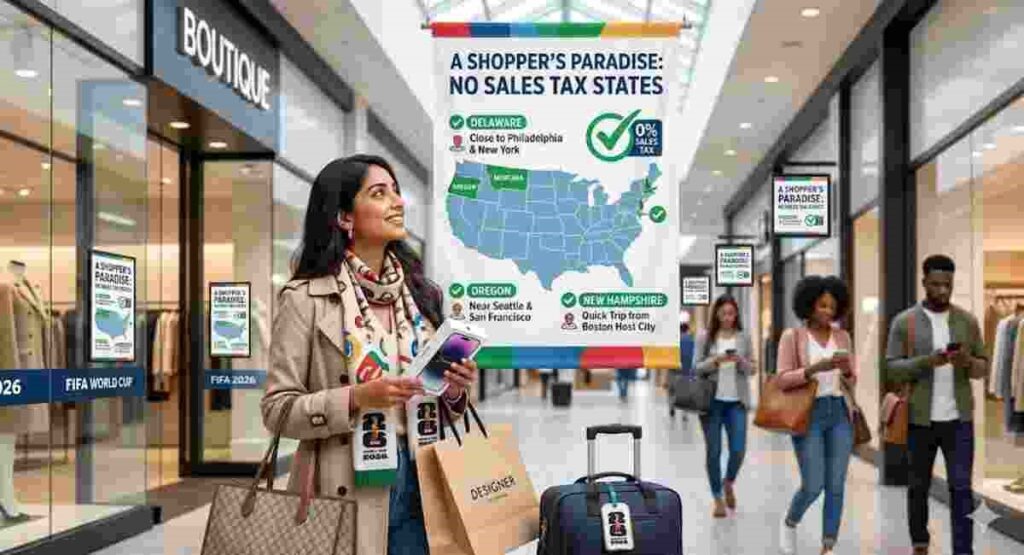
Not every state will charge you extra at the register. If you’re going between matches, you may want to wait to make your “big ticket” purchases (think iPhones and designer clothes) for the few states where US sales tax is basically 0%:
DELAWARE: Situated near Philadelphia and New York.
MONTANA: Great if you’re taking a scenic road trip.
OREGON: A quick trip from Seattle or San Francisco.
NEW HAMPSHIRE RE: Close to the Boston host city.
4. COUNTRY-BY-COUNTRY FIFA WORLD CUP 2026 OMA BUILDUP FORECAST:
As each city has its own rate, your burger in New York will be taxed differently than your burger in Los Angeles. Here is a rough breakdown of what to expect at the register in 2026: Saving on sales tax is great, but you can also save on transit by using the https://cricproz.com/public-transport-pass-fifa-2026-budget-guide/ for budget-friendly travel between matches.
NEW YORK CITY (METLIFE STADIUM AREA): Expect about 8.875%.
LOS ANGELES (SoFi Stadium): Get ready for somewhere between 9.5 and 10 percent.
ATLANTA: It’s usually about 8.9%.
MIAMI: A little bit less at 7%.
SEATTLE: About 10.25% (one of the highest in the nation).
5. TAX-FREE WEEKENDS: THERE IS A SECRET WIN FOR FANS:
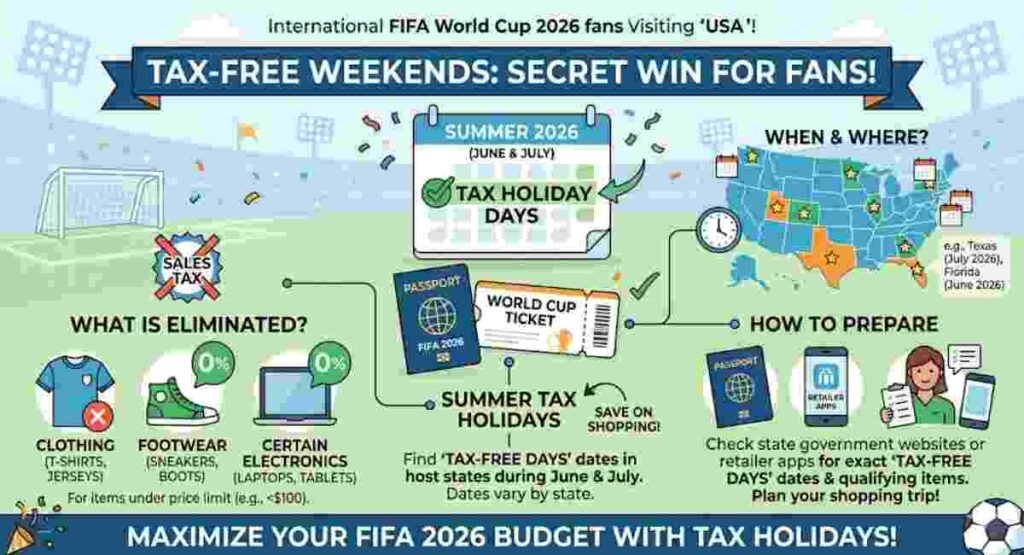
Many US states observe “tax holidays” during the summer to assist families with back-to-school shopping. And since the World Cup is held in June and July, hopefully, you’ll be able to find these dates in states like France or Texas. During these “days,” US sales tax is eliminated for purchases of clothing, footwear, and certain electronics priced under a certain amount.
6. THE ‘ESSENTIALS’ RULE: WHAT’S EXEMPT?
The—there is some good news: you don’t have to pay US sales tax on it. Basic food items, such as a loaf of bread or a gallon of milk in a grocery store, are considered “essentials” by most states and are therefore exempt from sales tax.
But “prepared food,” such as a hot pizza or restaurant meal, is nearly always subject to sales tax. Even more confusing? In a few cities, you don’t pay tax on a cold sandwich—but if it’s toasted for you, it is “prepared,” and the tax man takes his cut!
7. LODGING AND HOSPITALITY TAXES:
THE UNSEEN SURCHARGE OF SLEEPING: When you reserve your accommodation for FIFA 2026, your quote on the booking site might jump dramatically at the final step. Hotels and Airbnbs are subjected to “occupancy taxes” or “lodging taxes.” Some are higher than the standard US sales tax rate. In cities like New York or Chicago, that can tack on an additional 15% to 20% to your bill.
If you’re planning to pay $200 for a room, you may be looking at $240 “out the door.” If you want to avoid sticker shock, always check the “Total Price including taxes” before confirming your booking. Tax rates can differ significantly depending on the type of accommodation you choose. To make the best financial decision for your trip, read our detailed comparison on FIFA 2026 Accommodation: Airbnb vs Hotels to see which option saves you more money overall.
8. TIPPING VS. US SALES TAX: DON’T GET THEM TWISTED
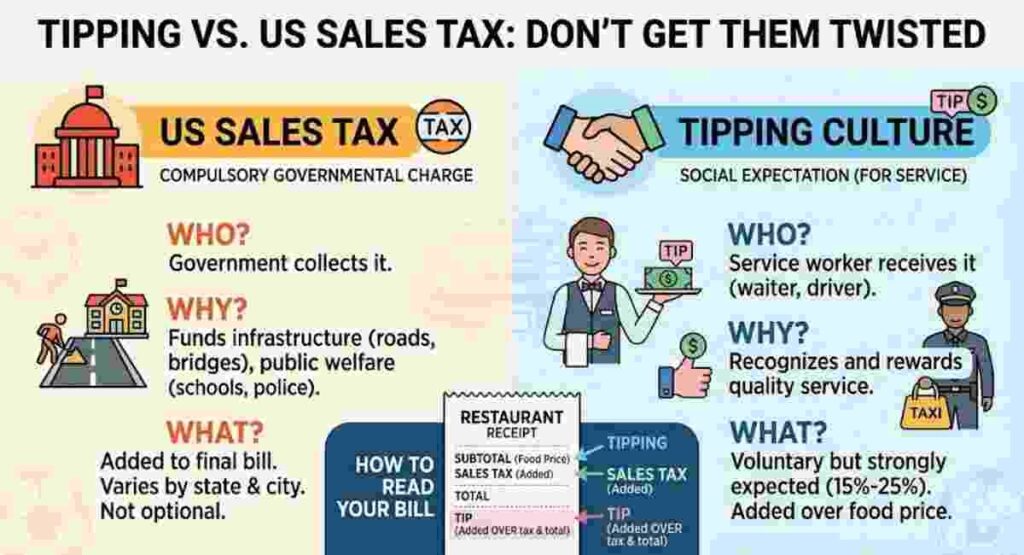
For many international supporters, the presence of sales tax in the United States and tipping culture somehow feels like a double punch to their wallet. You need to know the difference. Sales tax in the US is a compulsory governmental charge to fund infrastructure services and public welfare services.
Tipping between 15% and 25% is a social expectation to pay for service from your waiter or driver. On a restaurant bill, the tax is calculated on the price of food, and you are expected to add a tip over that. It can seem pricey, but that’s the way of American dining.
9. RENTAL CAR SURCHARGES: TAXES ON THE MOVE IT
Just town hall meetings that have a surcharge now taxes follow you on the road. With World Cup soccer on the agenda, be prepared for some exploding price tags on the road. Can I rent a car to drive between FIFA host cities? Prepare yourself. Rental car companies were infamous for piling on taxes and fees. In addition to the regular US sales tax, expect to pay some “Airport Surcharges,” “Facility Fees,” and “Vehicle Licensing Fees.”
These are not optional. When you are comparing rental rates on the web, make sure you read the small print. A vehicle that seems like a steal at $40 per day can easily turn into $75 per day after local US sales tax and stadium-area surcharges are applied to the check.
10. CAN TOURISTS GET A US SALES TAX REFUND?
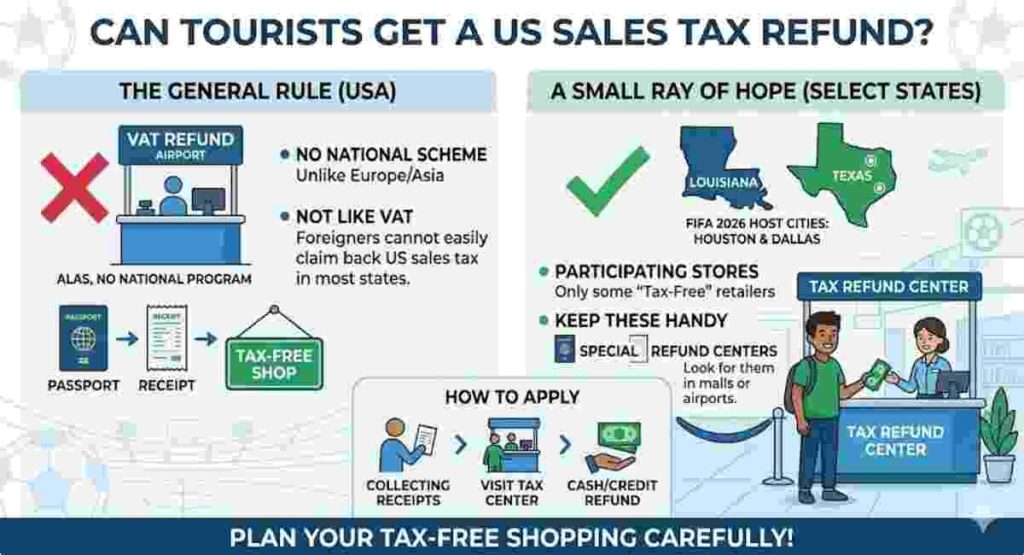
In a lot of countries, you get a refund on VAT at the airport before you fly home. Alas, the United States certainly doesn’t follow those rules. There is no national scheme equivalent to the one for VAT in which foreign visitors can claim back the US sales tax.
However, there is a small ray of hope in states such as Louisiana and Texas. Such states sometimes allow sales tax refunds for international buyers at some “tax-free” stores. Since Houston and Dallas are hosting matches, keep your receipts and your passport handy—you might just get some of that US sales tax back at a special refund center in the mall or airport. International shoppers in Texas can visit the Texas Comptroller portal to find authorized customs brokers for sales tax refunds.
11. THE “RECOVERY LEVY” AND SIN TAXES IN A FEW CITIES:
A few FIFA host cities have additional levies on certain goods they deem “unhealthy.” When you buy a soda in Philadelphia or Seattle, you’re paying more than just the usual US sales tax: these cities temporarily imposed a “soda tax.” On a similar note, “excise taxes” are applied to tobacco and alcohol. If you find that your beer or sweetened tea costs more than what they list on the shelf, that’s most likely because you’re paying a combination of that, plus local “sin taxes” and the regular US sales tax.”
12. ONLINE SHOPPING AND THE NEXUS RULE:
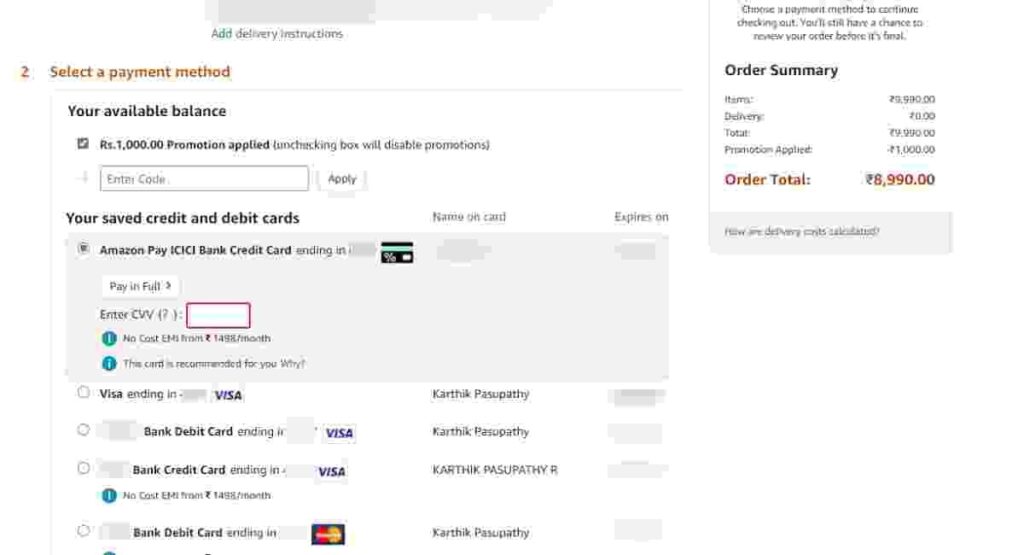
Crowds will pack the arena, gnashing their teeth and ordering everything on Amazon for delivery to their hotel to try to save a little time. You can’t avoid the US sales tax by thinking like that! The US law now requires most online sellers to collect sales tax based on the “Shipping Address.” So, if you’re staying in a high-tax city like Seattle and want to buy a pair of sneakers online, you’ll also be charged the local Seattle US sales tax at the checkout.
The only way around is to ship to a friend in a no-sales-tax state like Delaware. When buying official merchandise, make sure you are aware of the https://cricproz.com/fifa-2026-stadium-bag-policy/ so you know how to carry your new gear safely into the venue.
13. TOR REVEALING THE “NEXUS” HACK:
HOW TO GET SHIPPING ADDRESSES FOR DISCOUNTS: If you’re going to purchase high-tier electronics or gear for fans in the US, then the “Nexus” rule either is your bane or your boon. Most of the major online retailers, like Amazon and eBay, charge US sales tax by the location to which the package is shipped, not where you’re sitting when you hit “buy.”
If you’re staying in a high-tax city (Seattle, Los Angeles), but your next stop is a no-tax state (Delaware, Oregon), then think about shipping your orders to a “package locker” or your next hotel in that no-tax state. That’s for those of you looking for a quick and dirty save on 10%. However, always ring the hotel in the first place to make sure they will accept packages from guests, as some do charge a small “handling fee,” which may be more than what you get from not paying the US sales tax.
14. THE SODA TAX AND OTHER “SIN TAXES” IN HOST CITIES:
In some host cities of FIFA, there are what are called “sin taxes” by the locals. These are taxes levied on products that the government wants to discourage consumption of, like sugary drinks, tobacco, and alcohol. For years, Philadelphia has been known for its “Soda Tax” (Sweetened Beverage Tax), which levies about 1.5 cents an ounce on your drink.
With this added to the regular US sales tax, that bottle of Pepsi you bought may have cost you more than you thought. Similar sales tax spikes are seen handicapping alcohol; there is more tax on a pint of beer in a stadium than on a t-shirt. Planning for these “missing” taxes on the city level is very necessary if you want to enjoy the local nightlife between the games.
15. BUSTING THE “DUTY-FREE” MYTH AT US AIRPORTS:
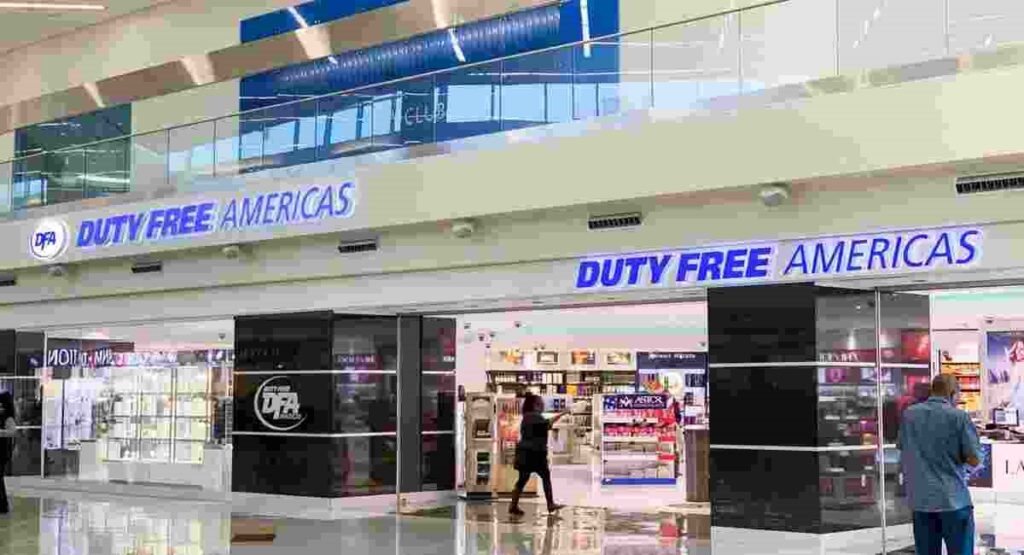
Many international fans assume they can avoid the US sales tax by purchasing all their merchandise at the “duty-free” shops in the airport before they fly home. Although these stores do not pay certain federal import duties, they are also not always a bargain.
There is a very high markup for the base price in an airport duty-free shop, so that even with the deduction of the US sales taxes, you end up paying more than you would have in a local Best Buy or Walmart. And “duty-free” is generally just for alcohol, tobacco, and luxury perfume. If you’re snapping up a souvenir t-shirt or gift box of chocolates at the airport, don’t be surprised if the cashier still tacks on the local US sales tax.
CONCLUSION:
Getting to know US sales tax might feel like a side game during FIFA 2026, but it’s a hurdle any traveler can jump with some preparation. What you need to know is that the price you see is almost never the price you pay—other than in those mythical “no tax” states like Delaware or Oregon. By applying a 10% mental buffer on all you purchase, knowing which products are “essential,” and learning what’s a government tax and what’s a service tip, you can save a little money on your travels.
The World Cup, like much of international soccer, is a celebration. Don’t let a couple extra cents at the cash register get you down. Armed with this city-by-city survival guide to US sales tax, you know when (and when not) to shop, how to eat, and where to find your way around in the US like a local. Always check the Official FIFA Website for the most up-to-date information on ticket pricing and any regional tax exemptions.
Frequently Asked Questions
Q1. Does the price on an item’s tag include US sales tax?
Ans: No. Unlike VAT in some countries, US sales tax is almost always added at the register. The price on the tag is the “sticker price,” and the sales tax is added according to the rules for the city and/or state you’re visiting. If you want to manage your overall expenses beyond just taxes, check out our https://cricproz.com/fifa-2026-budget-travel-guide/ to save money on every part of your trip.
Q2. Which FIFA 2026 cities have the largest US sales tax?
Ans: Currently Seattle and Los Angeles rank as 2 of the highest, with a combined state and local rate of 10.25%. If your purse strings are tight, these are the cities you need to be the fairest with your money in.
Q3. Can I claim a US sales tax refund at the airport when I leave?
Ans: Generally, no. The US federal government does not provide a national sales tax refund program for tourists. But Texas (with Dallas and Houston) does have a sales tax refund scheme via third-party companies at designated locations if you buy from participating stores and present your passport.
Q4. Is there US sales tax on FIFA World Cup tickets?
Ans: Great news! Without exception, host states including Florida (Miami), Georgia (Atlanta), and Missouri (Kansas City) have enacted special laws exempting official FIFA ticket sales from US sales tax. So that means the price that you see on the official FIFA portal is close to the price you will pay.
Q5. Should I be charging sales tax on groceries in the US?
Ans: Most “unprepared” grocery items, such as milk, eggs, and fruit, are exempt from US sales tax in most states. But “prepared” food—such as a hot rotisserie chicken or a sandwich from the deli—is generally taxable.
Q6. Is there US sales tax on children’s clothing?
Ans: It varies by state. Pennsylvania (Philadelphia) and New Jersey (near NYC) are two states that don’t have US sales tax on most clothing and footwear, so they are perfect places to get jerseys for the family.
Q7. Why is there a different tax rate at my hotel vs. the mall?
Ans: Hotels are required to pay a “lodging” or “occupancy tax,” which is frequently significantly greater than the normal sales tax. Local rates may be added on and can be as high as 15 to 20 percent in some major cities to fund tourism and stadium projects.
Q8. Do I have to pay US sales tax or any other tax if I buy something online for the tournament?
Ans: Yes. If you buy something on Amazon to be shipped to your hotel, the site will compute the US sales tax using the hotel’s zip code. You only avoid this if the shipping address is in a no-tax state, like Delaware.
Q9. Is the US sales tax the same as a tip in a restaurant?
Ans: No. These are two separate costs. The sales tax in the US is a compulsory charge that is collected by the government. A tip is a voluntary (but socially expected) 18-20% payment for your server’s service. You should pay for both.
Q10. How can I quickly work out U.S. sales tax?
Ans: A quick “rule of thumb” is to add 10% to any price tag. If a souvenir is $20, the total is going to be about $22. While the actual one may be at 7% or 9%, use 10% for the sake of being prepared with enough amount of cash.