A strike rate in cricket is a crucial factor to judge the form and impact of a player. Now, with everything being so fast-paced, it appears that the strike rate in cricket is what decides the greatness and tactical value of a contemporary sportsman. Although batting averages are still relevant, the product that is most talked about these days is the explosive strike rate in cricket.
So, what is a strike rate in cricket, and how is it calculated for batsmen and bowlers? To get a hold on the game’s statistics, you must know how to calculate a strike rate in cricket. “It’s a complete breakdown of the stats, the formulas, and the records that every fan should know.”
1. WHAT IS THE BATTING STRIKE RATE IN CRICKET?
That is the strike rate. High-scoring games are dependent on this number in games. Rather than just seeing how many runs a batter has, the strike rate tells us how quickly they are getting at the bowl. Strike Rate in Cricket i
So all you have to do is: Divide total runs by balls faced and multiply with 100 to get the % of: $$\text {Batting Strike Rate} = \left( \frac{\text {Total Runs}}{\text{Balls Faced}} \right) \times 100$$ Let’s see a practical application: Say a player comes to the crease and smashes 80 runs off 40 balls. The formula to calculate their impact is $(80 / 40) \times 100 = \math {200.00} $. And here, the batsman is scoring at a breathtaking speed of 2 runs per ball he faces, which is difficult for the bowling team to deal with.
2. HOW IS STRIKE RATE CALCULATED IN CRICKET BOWLING?
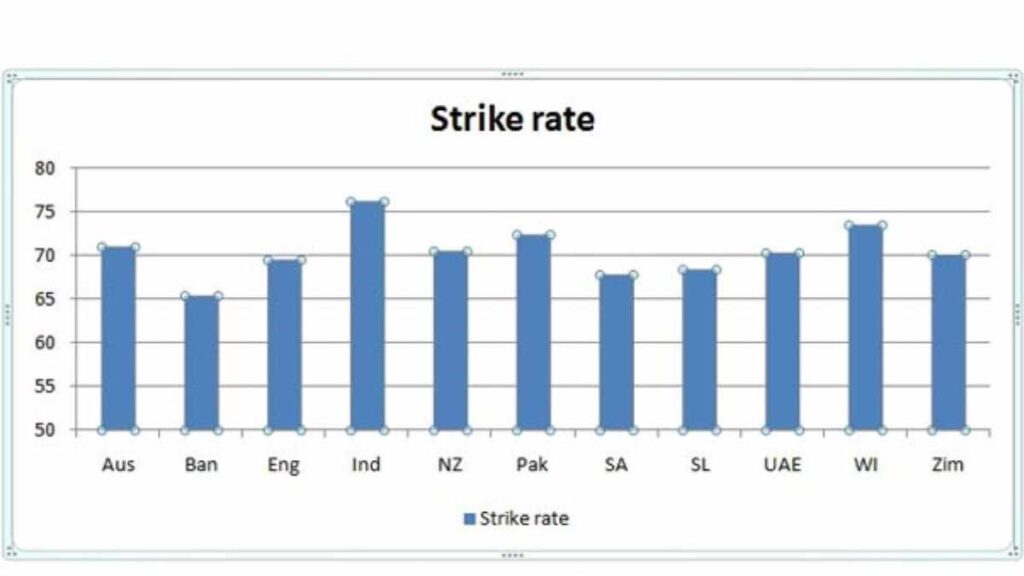
A bowling strike rate, as opposed to a batting strike rate, reflects the rate of occurrence and not pace. It shows us how many balls a bowler has bowled for each wicket he has taken. The Bowling Formula: Bowling Strike Rate = Total Balls Bowled / Total Wickets Taken Example Case: Bowler A has bowled 60 balls (10 overs) and taken 4 wickets, and he has a strike rate of 60 / 4 = 15.0. 3 Now the rest of the stuff: “This means the bowler takes a wicket at every 15 balls.”
3. 10 BEST SECRETS FOR MASTERING STRIKE RATE ANALYTICS:
- Dot ball impact: It is interesting to note that every dot ball faced reduces a batsman’s strike rate.
- Bowling Rate: Bowling strike rate has more importance than economy rate in T20s.
- Format Sensitivity: What constitutes a “good” strike rate varies from 140 in T20s to 50 in Tests.
- Field Placement Influence: At high strike rates the captains tend to give a ring field. Strike Rate-
- Average Paradox: On occasion it is better for the team to have a batsman with a higher strike rate and a lower average.
- Role of the Finisher: For players in the death overs, a pitch of 180+ strike rate is the key to being elite.
- Powerplay Excess: Openers take advantage of the 30-yard circle to enhance their strike rate from the very beginning.
- Wickets as Currency: Strike rate quantifies how “lethal” a bowler is.
- External Conditions: The dampness of the pitch can reduce everyone’s strike rate, no matter what their ability level.
- Data-Driven Auctions: IPL sides are now willing to pay more money for a player who has a better strike rate against a particular arm of bowling.
4. STRIKE RATE IN CRICKET VS. BATTING AVERAGE:
The biggest misunderstanding among fans is to dismiss one of the two when assessing a player’s strike rate in cricket. To get a complete picture, you need to see how the strike rate in cricket supports the batting average.
An anchor: A player with a high average and a medium strike rate in cricket. These batsmen (e.g., Steve Smith or Kane Williamson) are the ones who provide much-needed solidity in the innings.
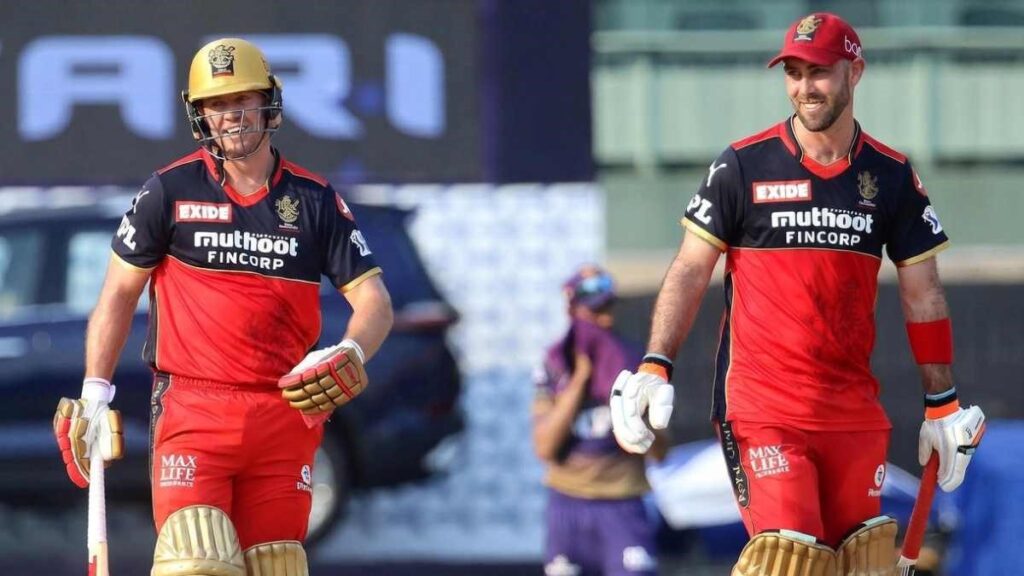
The Finisher: A cricketer with an average that is not exceptionally high and a strike rate that is tremendously high. Exactly such players (see Glenn Maxwell or Andre Russell) deliver that “X-factor” to snatch games in the last overs.
5. THE “T20 REVOLUTION” BENCHMARK:
The benchmark for a “good” strike rate in cricket has changed dramatically in modern T20 cricket. 120–130: This is a decent strike rate in cricket, but it usually requires the batsman to keep a high average for the team to benefit from it.
140–150 – Elite Level – This is the mat-hitter strike rate in cricket, which can put a lot of pressure on bowling attacks and can shovel the momentum of the match in the team’s favor. 160+: The Power Hitter Zone – Nearly all players in this category qualify as having the highest strike rates in cricket; they rarely play enough balls for their averages to be considered highly meaningful, but this list also contains a few players who hold very high career averages.
6. WHY BOWLERS LIKE TO HAVE A LOW SR:

Batters want to keep their scoring rate as high as possible, and bowlers want a low strike rate in cricket. A bowling strike rate is the average number of balls bowled per wicket taken, and a low bowling strike rate indicates a “strike bowler,” i.e., a bowler who can take wickets regularly and has the ability to break partnerships of two danger men.
“In the longest format of the game, a bowling strike rate going under 50 in cricket (which means taking a wicket every 8 overs) is what you expect from a legend of test cricket. In the end, the best way to measure a bowler’s power and match-winning potential is to watch them keep the strike rate down in cricket.
7. THE EFFECT OF ‘DOT BALLS’:
The secret enemy of a high strike rate in cricket is the dot ball. Although a batter could hit two huge sixes in an over, if they also face four dot balls, then the strike rate in cricket for that over stands at just 200. While 200 seems a high number, a few dots consistently over a period of time can bring a player’s seasonal average for runs drastically down.
Modern coaches now warn of the need to “strike rotate” to keep a player’s strike rate in cricket alive. The batters are, indeed, ‘noodling’ for singles and twos and even threes to keep the scoreboard ticking, and that helps with maintaining a good strike rate in cricket even when you don’t get boundaries. This is a very smart tactical shift, as it means that the fielding team is under pressure all innings and not just in phases of it.
8. PITCH AND CONDITIONS:

So, it should not come as a surprise that modern data analysts have moved past basic statistics and are now looking at “True Strike Rate in Cricket.” This statistic is an adjustment for pitch conditions; say a pitch is slow and the mean strike rate in cricket among all players in the match is 110, a player whom all the others consider a cliche “playing above his reputation” and who is scoring at 125 will be actually making more runs than the others.
On the other hand, a batter who bats at a strike rate in cricket of 140 on a flat, “road” track while the average is 150 may also be under-batting. A strike rate in cricket adjusted for the match environment helps coaches to understand which players are true match winners irrespective of the playing conditions.
9. THE “DEATH OVERS” SURGE:
A strike rate in cricket is not linear in nature during a match. For instance, a batter may bat at a strike rate in cricket of 80 at the start of their innings whilst “getting their eyes in,” but then bat at a strike rate in cricket of 250 when facing the last 10 balls of the match.
This radical shift is also why focusing on entry points and phase-wise performance—Powerplay vs Middle Overs vs Death Overs—will probably be the next scouting frontier. By studying strike rate in cricket in such different phases of the game, teams can identify players who are specialists in certain phases of the match.
10. PSYCHOLOGY OF THE STRIKE RATE:
A high strike rate in cricket brings its own stress and psychological monsters to deal with. A bowling captain frequently loses his head when a batsman is scoring at a 150-plus pace. The pressure by the opposition to become defensive in field placing and bowling lines ”safe.” Ironically, these defensive policies make it easier for the batsman to keep up a commanding strike rate in cricket. A player can demoralize the bowlers with the high strike rate in cricket to set the tempo. This reckless frenzy of playing causes losing wickets and momentum swinging of the game. In the end, a good strike rate in cricket can complete a turnaround of the match in a matter of minutes.
11. THE TSR (TRUE STRIKE RATE) METRIC:
Modern data scientists don’t just analyze the plain raw numbers. True Strike Rate takes a player’s SR and compares it to the average SR of all the players competing in that host’s match. The Secret: If a batsman strikes at 140 on a pitch that everyone else found difficult at 110, his “True SR” is $+30$. This is far more reflective of value than a batsman whacking away at 150 on a “dead track” where the baseline was 160.
12. STRIKE RATE / ECONOMY BOWLING:

Much like in any other form of cricket, the strike rate is often seen as the “bane” to a batsman’s economy. A bowler with a slightly worse economy rate (runs given away) is often forgiven if he’s taken a ton of wickets. Why? Because taking a wicket is the way to “reset” the batting side’s momentum most thoroughly and reduce the pace of scoring on the day. “You can analyze the latest player stats on ESPNcricinfo to see how strike rates impact rankings.”
13. HIGH STRIKE RATE AS A “SHIELD”:
A blistering strike rate for an opener a la Travis Head or Rohit Sharma serves as a shield for the other batters of the side. With 40 runs coming off just 15 balls, they “buy time” for the middle-order batters to get settled in without worrying about a soaring required run rate.
14. THE “INTIMIDATION FACTOR”:
Strike bowlers bowl differently to batsmen on high strike rates. Most of the time bowlers bowl “defensively” (keep a wide line or balls along the ground) to keep from getting hit too much. That can result in additional extras (wides/no-balls), which don’t get counted as “balls faced” by the batter but do add to the team’s total, so they’re effectively making the team’s “effective” strike rate higher.
15. CAREER LONGEVITY VS PEAK SR:
There’s a so-called “strike rate decay” secret that is often whispered about in selection meetings. As players get older, their reflexes start to dull, and their strike rate is almost always the first stat to decline, even if their average remains high. Teams do sometimes seem to favor a younger player with a strike rate of 150 and an 80-batting average rather than an experienced player with a strike rate of 125 and a batting average nearer to 50, even when the latter is more “steady.”
16. THE INFLUENCE OF “INTENT”:

In the Baz ball age of Test cricket, strike rate infuses a psychological element. With a high SR (above 80) in a Test match, a team can push for a declaration prematurely and have more time to work up the opponents. Here, the strike rate is not just about runs—it is about buying time.
17. STRIKE RATE IN THE POWERPLAY:
The first 6 overs of a T20 are special, as only two fielders can be fitted outside the circle. A “secret” of elite pure openers is to focus on strike rate instead of wicket preservation. A player who gets a score of 30(10) and is dismissed is on many occasions statistically more valuable to the winning probability than a player who gets 40(35) and is “not out.”
18. FINISHING POWER:
The “Last 5” Rule the expected strike rate climbs from 130 to 200+ in the last 5 overs of a limited-overs match. Elite “finishers” (MS Dhoni in his prime or Heinrich Klaasen) get almost 100% of their judgment based on their “death overs strike rate.” A finisher with an SR of 110 is a liability, no matter how many runs they get.
19. THE “BALLS BOUNDARY” LINK:
Locally, strike rate and are mathematically related. A batter needs to hit a boundary every 4-5 balls to keep his strike rate at 150. If they go 10 balls without a boundary, their strike rate will take a nosedive unless they are running improbable threes.
20. MATCH SITUATION: THE “RPO” VS SR”:
The key to successfully chasing a target is to keep your strike rate similar to the required run rate (RRR). If the RRR is 9.0, your strike rate should be at least 150. If the RRR is 6.0, then an SR of 100 is more than fine. The best players are “chameleons,” who can adjust their strike rate to the precise requirements of the scoreboard.
21. THE EMPTY WICKET STRIKE RATE:
A bowler can have an excellent strike rate because someone like them finishes off the tail (wickets 8, 9, and 10). Analysts prefer using a strike rate derived from the top 5 wickets.
22. PARTNERSHIP BREAKING:
A “strike bowler” is usually introduced when the batting SR is greater than the required SR. They are not meant to save runs but to reduce the batting team’s SR by picking up a wicket.
23. SWING VS. SPIN SR:
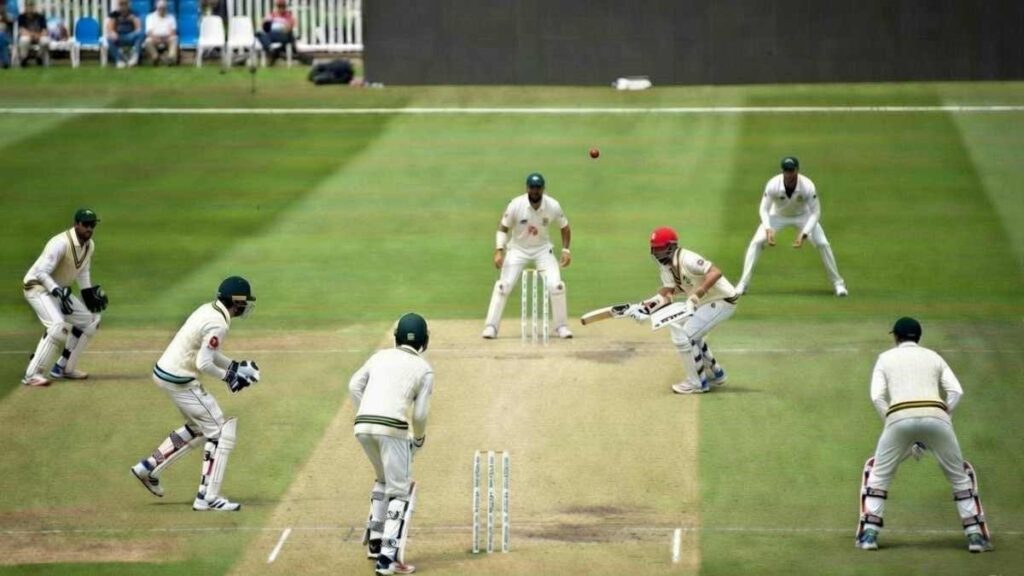
In general, leg-spinners have superior (lower) SR than finger-spinners, because they impart more “deception” on the batsmen and take wickets faster, but they do tend to give away more runs (in higher economy rate).
24. THE NEW BALL ADVANTAGE:
Ball bowling rates are significantly higher in the first 5 overs of a Test match, thanks to the “shine” on the ball and the “seam” of a new ball.
25. SCORE IMPACT WITH STRIKE RATE:
If one player alone increases his strike rate by as little as 5% (for example, from 130 to 136.5), a team’s T20 projected score increases by almost 10-12 runs.
26. THE “BASEMENT” SR:
Teams have started calculating the minimum strike rate that they must maintain to keep up with the game. If “Basement SR” is 120, and a player is sitting on 105, that player is literally “batting the team out of the game.
27. ” PROBABILITY OF WINNING (WIN VIZ):
There is ball-by-ball analysis that shows a wicket (bowling SR) generally has more effect on win probability early in an innings, while batting SR has more effect later in an innings.
28. MATCHUPS (THE “SECRET SAUCE”):
A batter’s career SR might be 140, but vs. left-arm orthodox spin it might be 90. Captains make use of this “Matchup SR” when deciding who bowls next.
29. THE “LULL” PERIOD:
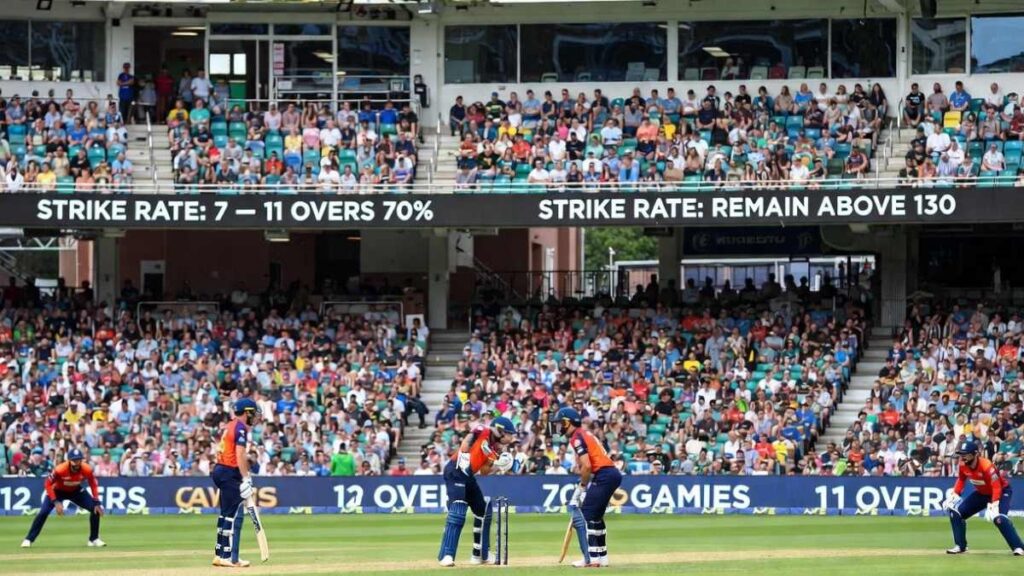
Strike rates statistically take a nosedive from 7 to 11 overs in a T20. SRs can remain above 130 in this “lull” and go on to win $70\%$ of games.
CONCLUSION:
The strike rate has grown from a niche statistic to the defining pulse of contemporary cricket. It’s no longer sufficient just to “not get out.” In an era of data and vanishing returns, how quickly a player affects a game—by scoring runs or taking wickets—shapes their market value and their legacy.
Strike rate gives you the opportunity to watch the match as a coach. You start to understand that a 30-run cameo off 12 balls is more match-winning than a slow, laborious fifty. With cricket every day moving more towards the shorter formats of T20 and T10, the strike rate will become the ultimate gauge of a player’s “clutch” factor and tactical genius.
FAQs
Q1. Can the strike rate be above 100?
A. Yes. Whenever anyone hits more runs than the balls faced in batting, his strike rate will be above 100. In contemporary T20 cricket, finishing at the highest level often implies having a strike rate in excess of 150-200 in the death overs.
Q2. Is a high strike rate good for bowling?
A. It is better for the bowlers to have a lower strike rate. The smaller the number, the better the bowler, as he needs a smaller number of balls to get a wicket. Take the example of someone with a strike rate of 20 (one wicket every 20 balls), who is way more lethal as compared to someone with a 50-strike rate.
Q3. What is the effective difference between economy rate and strike rate?
A. These are usually mixed up: Why is the economy important? A bowler’s economy rate is how many runs he concedes in an over. This is the point of “run saving.”
How long until the strike rate catches up?
Strike rate: Indicates the number of balls needed by a bowler to take one wicket. It’s about “removing players.”
Q4. Who holds the record for the highest career strike rate in ODI?
A. Historically, the likes of Andre Russell and Glenn Maxwell top the majority of charts, with career strike rates frequently in the region of 120-130. In the old days, anything over 90 was considered to be in the realms of the “elite,” but the “modern era” has seen those standards move somewhat.
Q5. Why does strike rate carry more importance in T20 than in Test cricket?
A. There are only 120 legal deliveries in an innings in a T20. Because balls aren’t in endless supply, it is riskier to waste them by taking too long to score than it is to lose a wicket. There’s no such thing as a limit of balls in Test cricket, so the focus is more on surviving (average), and you wear out the other team over the course of several days.