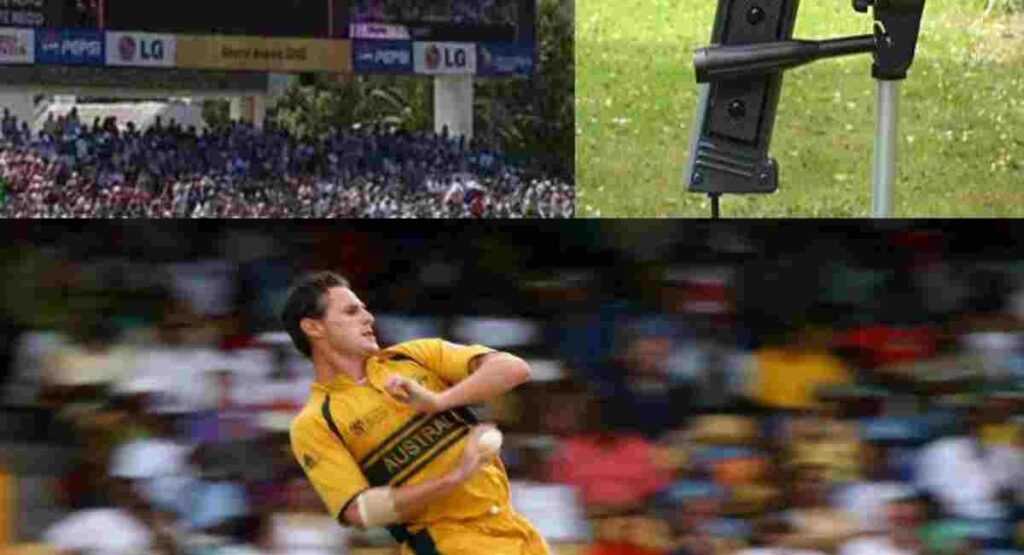
Generations of cricket coaching were based on pure visual inspection. A coach would stand behind the nets, squint their eyes, and tell a fast bowler to “keep the arm high” or an off-spinner to “snap the wrist harder.” But the guessing game has gone out of the door with the modern era of sports science. Now the difference between a club weekend trundler and an international top-tier bowler comes down to the very physics of delivery, tracking the trajectory of the cricket ball release angle.
To know the exact biomechanics of the delivery stride is no longer a choice for the dedicated analysts; cricket ball release angle is the beginning in high-tracking. In this masterclass tutorial you will learn how to derive the cricket ball release angle directly from video streams.
Also, we will explore the newest computer-vision software frameworks available on the market to help you automate your workspace to make the process of measuring cricket ball release angle effortless for the coaches. With these structural training principles, you can get the precise moment the ball leaves the hand exactly right and find out why the examination of the cricket ball release angle has changed the contemporary bowling statistics.
Table of Contents
1. THE PHYSICS OF THE DELIVERY STRIDE IN CRICKET
As soon as the leather ball leaves the fingers of the bowler, it is a seeder into the air subject to fluid mechanics, gravity, and air resistance. The cricket ball release angle is the actual geometric vector with respect to the horizontal playing field at the exact moment of release.
When sports biomechanisms study this parameter, they focus on three main elements:
The Vertical Release Vector: The pitch or launch angle from the ground plane that determines how high the initial trajectory will be.
Lateral Align Axis: How far towards the bowler’s body the ball is thrown from the bowling crease.
Spin Axis of Rotation: The axis through the component of spin whose direction is perpendicular to the velocity vector spin axis tilts with seam position, acts as a spinning gyroscope, and is influenced by aerodynamic forces.
When coaches learn how to calculate the cricket ball release angle, they can precisely record a bowler’s mechanical baseline. This information enables teams to predict pitch-map points, to optimize down-the-pitch trajectories, and to repair mechanical defects before they cause repetitive stress injuries or stress fractures. Furthermore, understanding how these environmental forces change delivery trajectories is crucial for fantasy players; learn more in our deep dive on https://cricproz.com/weather-impact-pitch-fantasy-cricket/ to master atmospheric shifts.
2. THE THREE MAJOR FORMS OF BOWLING ALIGNMENTS
A bowler’s body type and run-up will naturally determine their body position on the crease. Prior to the installation of the tracking device to measure the cricket ball release angle, you are required to classify the bowler into one of the three major structural bowling alignments. A dedicated technical setup is required, capable of following rapid hand movements faster than 130 km/h. This is similar to how advanced tracking systems in https://cricproz.com/smart-shoes-2026-no-balls/ utilize baseline pressure networks to monitor a bowler’s landing foot.
A. THE PURE SIDE-ON BIOMECHANICAL ALIGNMENT
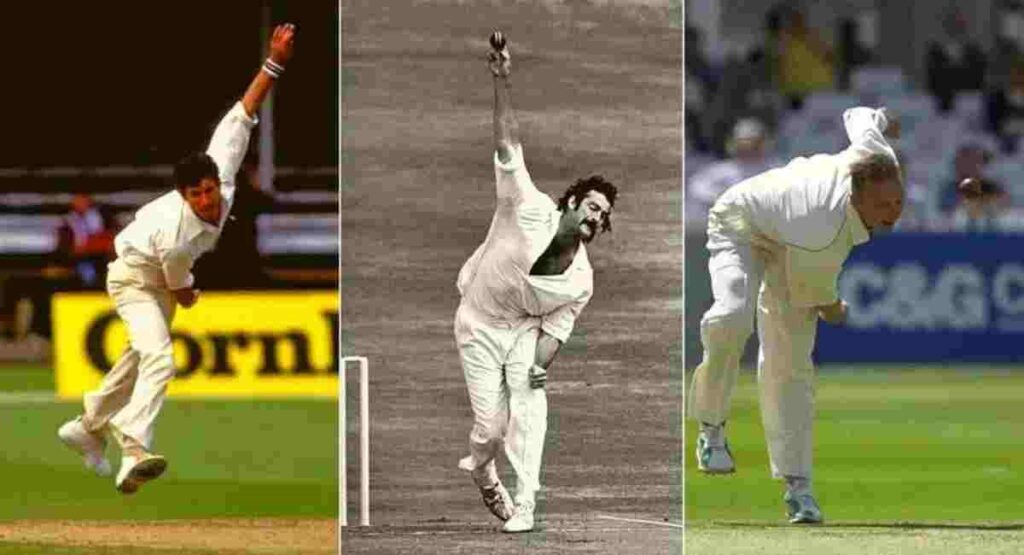
In classical side-on action (cricket ball release angle, cricketer’s back foot lands parallel to the crease line, and the chest is directed towards the cover region), both the cricket ball release angle and the cricketer’s feet and body are pointing toward the cover area. The lead shoulder is aimed right down the pitch at the batter. This structural position tends to create a very vertical arm path leading to a steep over-the-top throw vector.
B. BOWLING POWER BASE: THE FRONT-ON-AT-CREASE POWER
Both hips are facing the cricket ball release angle and track; the back foot is landing pointing directly at the stumps. This type of structural arrangement usually results in a more laterally positioned release point, which in turn enables the ball to angle into the right-handed batsman from a more laterally inside entry trajectory.
C. THE MIXED ACTION STRIDE (THE INJURY RISK ZONE)
A mixed action is when a bowler adopts a side-on position (back-foot placement) and then turns his body to bowl with his chest facing the batsman (front-foot position), or vice versa. This mechanical conflict loads the cricket ball release angle and the lumbar spine to twist under massive force. Tracking data shows mixed actions produce erratic, unstable release paths, which are extremely challenging to maintain a long-term structural balance with.
3. HARDWARE AND CORE SENSORS FOR MODERN BIOMECHANICAL CAPTURE
If you want to analyze the cricket ball release angle like the experts, you can’t use consumer smartphones at the regular 30fps video frame rates. A dedicated technical setup is required, capable of following rapid hand movements faster than 130 km/h.
A. HIGH-SPEED METRIC OPTICAL CAMERAS
In order to accurately stop the frame at the exact millisecond of the cricket ball release angle separation, you should use optical cameras with a frame rate of at least 240 frames per second (fps); however, this increase to the inversion of up to 500 fps or 1000 fps is recommended for professional laboratories. The camera must be positioned at a right angle ($90^\circ$) to the bowling crease and the level of the bowler’s fully extended arm to prevent the visual perspective errors.
B. SMART WEARABLE INERTIAL SENSORS (IMUS)
State-of-the-art sports laboratories are utilizing ultra-lightweight Inertial Measurement Units (IMUs) attached to the cricket ball release angle, the bowler’s forearm, and the wrist. These micro-sensors contain high-frequency gyroscopes and accelerometers that monitor angular rate variations instantly. The sensor arrangement allows one to measure wrist-snap speed and hand orientation without recourse to multi-camera studio arrays. For a deeper dive into the mathematical models of projectile trajectories and sports physics, you can read the official research papers hosted on the Springer Link Sports Biomechanics Database. This external reference provides extensive laboratory case studies that validate our core trajectory formulas.
4. REVOLUTIONARY COMPUTER VISION AND SOFTWARE PROCESSING
When you record your high-speed footage, the raw video files have to be processed through proprietary biomechanical motion tracking software. The Software Layer: Raw pixels to accurate mathematical degrees for describing cricket ball release angle.
A. KINOVEA MOTION TRACKING FRAMEWORKS AUTOMATED
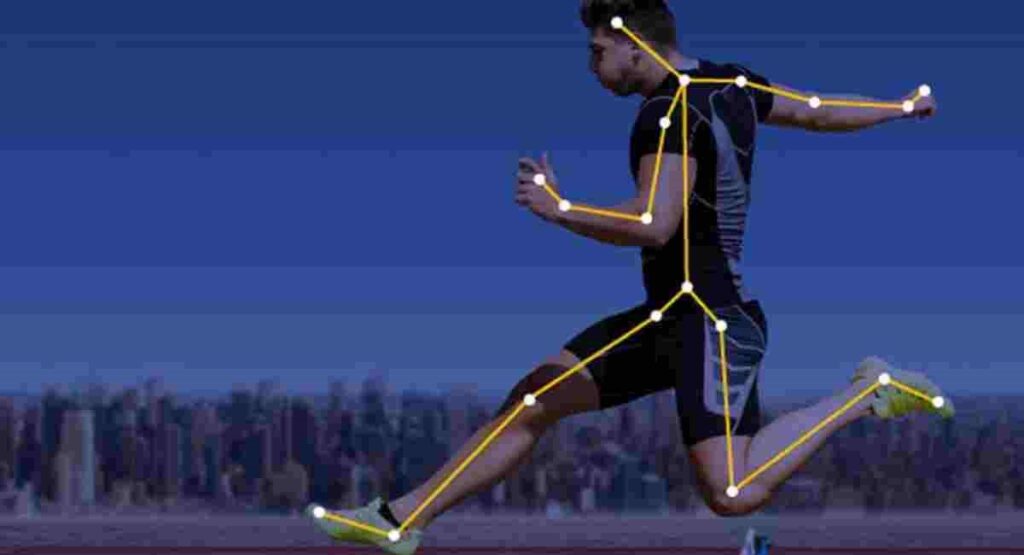
For academies on a tighter budget and independent analysts, Kenova is a great, free tool. At 240fps with the video files, you can use the manual angle overlay feature of cricket ball release angle software to draw the coordinate system from the bowler’s shoulder joint, along the wrist, and out to the ball.
3F6·1-5C1B7 6F Barker. Best of all, you get a very accurate launch angle reading by tracking the ball’s path on three frames just at release.
B. PYTHON-BASED MEDIAPIPE AND OPENPOSE PIPELINES
High-level analytical teams will frequently make automated pipelines using Python modules such as Open Pose or Google Media Pipe. These are computer-vision models that detect human joint coordinates (key points) in each frame.
By applying proprietary algorithms to those key points, developers can determine the precise cricket ball release angle of the forearm relative to the horizon line to automate the processing of large quantities of bowling data.
5. MATHEMATICAL FORMULAS FOR TRAINING LOAD CALCULATIONS
For sports scientists and software developers creating tracking apps, data calculation entails converting pixels to spatial coordinate points. To calculate the exact cricket ball release angle, we apply basic trigonometric rules of right-angled coordinate planes. Let the actual position of the ball at the frame of release be denoted as “x” and the position in the next frame be “y.”
The vertical launch angle $\theta$ with respect to the flat court is obtained as: $$\theta = \tan^{-1}\left(\frac{y_2 – y_1}{x_2 – x_1}\right) $$ In addition, considering the multiaxial rotation of the wrist joint with respect to the vertical axis, the angular deviation vector is also calculated using cosine matrices: $$\cos(\alpha) = \frac{\vex{a} \cot \vex{b}}{\|\vex{a}\| \|\vex{b}\|}$$ By incorporating these mathematical equations in your backend, your platform can immediately output accurate degree readouts from raw pixel tracking data for ultimate technical fidelity. For deeper academic research on projectile flight and athletic angles, refer to the global Springer Sports Biomechanics Database case studies.
6. ROUTINE FOR IN-NET TESTING: A PRACTICAL TUTORIAL
Now, let’s take this theoretical science and turn it into a practical, step-by-step process you can run on your academy nets right now. Use this procedure to calculate the cricket ball release angle for any bowler:
STEP 1: TRIPOD STABILITY PLATFORM PLACEMENT
Place your high-speed camera on a stable tripod at a distance of 5 m from the cricket ball release angle and the bowling-green crease and perpendicular to the bowler’s run-up path. To learn more about setting up these tracking frameworks, you can explore the official Google MediaPipe Open-Source Documentation for developer tools.
STEP 2: STADIUM SPACE SETUP AND LIGHTING
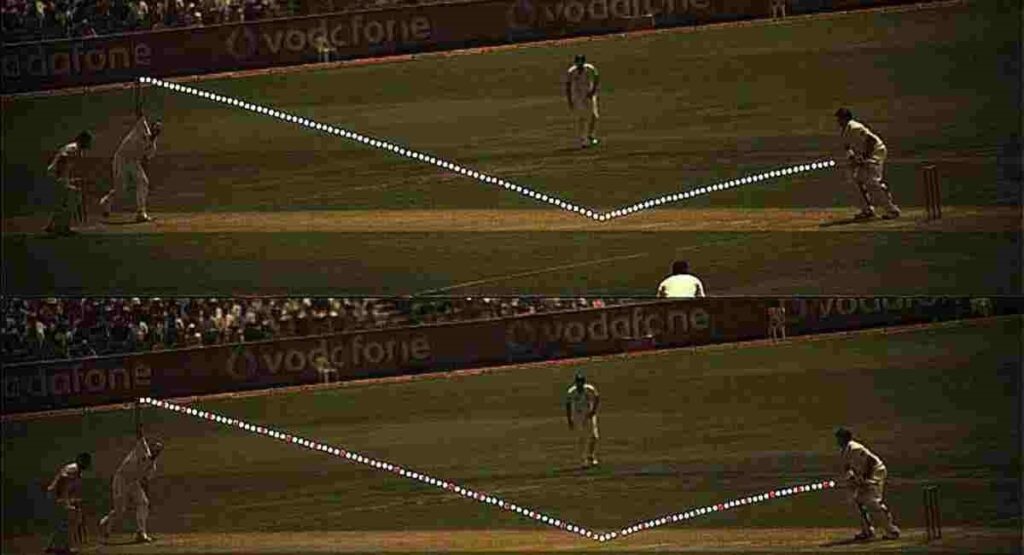
Position a high-visibility metric measurement reference (e.g., a 1-meter rule) on the cricket ball release angle pitch line at the foot of the bowler. This way your program has a physical scale to turn pixels into actual centimeters. For indoor testing, apply bright, non-stroboscopic LED studio lighting to the sides of your high-fps video to achieve bright and clear frames.
STEP 3: MARKING APEX JOINT SENSORS
Apply contrasting adhesive marker dots to the key joint positions of the bowler: the lateral shoulder joint at the center of the cricket ball release angle, the apex points of the elbow, and the styloid process of the wrist. These markers can then be used as sleek, high-contrast tracking points for your computer-vision software layer.
STEP 4: REGISTRARE I CAMPIONI DI TEST AD ALTA VELOCITÀ
Hold the bowler to maximum match intensity as he delivers a set of 6 balls. In other words, your tracking data will reflect autistic competitive habits and not a relaxed slow-mo. Training variation.
STEP 5: TURATRICE FERMO-IMMAGINE SEPARAZIONE DIGITALIZZAZIONE
Upload the new video file to your analytics software. Scroll down to the frame where the leather ball is physically separated from the index finger. Using your protractor to measure, compare the ball’s vector movement over the next 3 frames against the baseline pitch line to find your delivery number.
7. DETAILED STUDY OF FAST BOWLING RELEASES
Fast bowling presents the need to control enormous physical forces and speeds. Your analytics while you track fast bowlers must be on him finding the optimal combination of high speed and safe, sustainable stress on joints for a cricket ball release angle. If you want to replicate these high-repetition tests independently without a live batter, you can combine this tracking routine with the https://cricproz.com/budget-bowling-machines-2026/ to deliver automated, consistent testing lines.
A. SEAM ORIENTATION AND AERODYNAMIC LAUNCH PRESSURE
In high-speed fast bowling, the seam position on release determines how the air pressure behaves around the ball. A stable release angle of $20^\circ$ tilted toward the slip cordon is sufficient to force air to travel faster on one side to induce the pressure difference that drives the conventional out-swing. When the release angle of the hand is varying, the ball wobbles in the air, eliminating any aerodynamic swing benefit.
B. REELING IN ELITE VELOCITY OUTCOMES
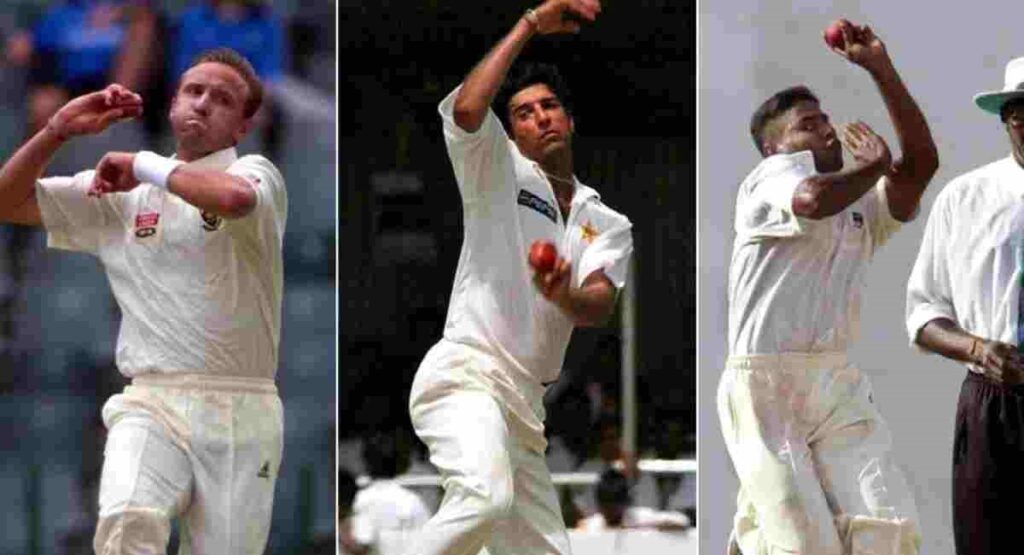
If a fast bowler’s vertical arm path falls under $45^\circ$ with no corresponding increase in the degree of hip rotation, they generate a sling, round-arm style like Lasith Malinga or Jeff Thomson. Although this lower path makes for a difficult, sliding approach for the batter, instructors must also watch the cricket ball release angle and internal rotation load on the shoulder joint for fear of long-term rotator cuff tears.
CONCLUSION:
Studying the cricket ball release angle is a fundamental change from observing with traditional human eyes towards a more quantitative and scientific approach in athlete development in cricket. By merging high-speed cameras, wearable sensors, and intelligent computer-vision software, it is possible to create a very precise, objective model of a bowler’s mechanical patterns. To see how these metrics translate into elite match performance, check out our https://cricproz.com/naseem-shah-vs-jasprit-bumrah-2026/ to see real-world vector application.
With these sorts of advanced data metrics becoming mainstream through cricket academies across the world, the coaches, players, and content producers who best utilize these sports science tools will naturally be the leading lights of the industry. Begin tracking your delivery metrics now, clean house on your mechanical defects, and harness the power of modern sports science to lead you to your peak performance potential.
Frequently Asked Questions (FAQs)
Q1. How does a bowler’s height influence the angle of cricket ball release?
Answer: The bowler’s height shifts the absolute position of the release point in the air, but it doesn’t influence the calculation based on the geometrical parameters of the cricket ball release angle. Since a taller fast bowler is naturally releasing the leather ball from a higher coordinate plane, they will be able to produce a steeper downward trajectory path even if their hand trajectory matches the exact delivery vector of a shorter player.
Q2. Is it possible to calculate the cricket ball release angle with a simple phone camera?
Answer: Yes, but you can’t use the normal 30fps or 60fps recording options, as the ball will become this huge blur that you won’t be able to use to compute the launch variables. To extract clean data, change your smartphone camera’s setting to its native slow-motion mode of 240 fps, which is enough to clearly see each frame from which the cricket ball release angle can be calculated using an application like Kenova.
Q3. What should be the perfect vertical trajectory to get maximum fast-bowling accuracy?
Answer: For full-length fast bowlers wishing to land consistent line and length deliveries, the preferred vertical cricket ball release angle is in the vicinity of $5.5^\circ$~to~$7.0^\circ$. It is this exact part of the trajectory that allows the ball to consistently talk to good length and confuse top-order batters on whether to come forward or go back.
Q4. Liquidation measures due to strong stadium crosswinds?
Answer: The strong stadium crosswinds do not change the angle of the physicality of the cricket ball release at the very moment the ball leaves the fingers; however, it does this immediately after. When you’re looking at your bowling stats, you have to account for windage—even the best launch angle can be thrown off course by strong winds.
Q5. How much should a club player examine their delivery stride mechanics?
Answer: Professional academies suggest that you should measure your cricket ball release angle once every 8-12 weeks in a training macro cycle. You should be regularly testing so that you are not developing any hidden structural issues or muscular fatigue, which could be silently dropping your arm path and changing your ideal launch vectors.
Q6. Does the delivery orientation alter between off-spin and leg spin?
Answer: Yes, wrist positions are totally different in the spin disciplines, which immediately changes the cricket ball release angle. Off-spinners tend to have a very vertical flight path, around $75^\circ$ to $85^\circ$, for a sharp dip, whereas leg-spinners tend to have a slightly lower arm position, producing a flatter, more horizontal path with more sidespin.
Q7. How does late release ruin your bowling length at the crease?
Answer: The cricket ball release angle is too far down if your fingers are holding on to the leather ball for a millisecond longer at the crease.
Q8. Is it possible to avoid severe injuries in bowling by monitoring body mechanics?
Answer: Absolutely. Monitoring the cricket ball release angle allows coaches to identify when a bowler’s arm path is moving down into a perilous “mixed action” field. If the system indicates that a bowler’s arm vector is diversifying, it means his lower back and shoulder are under a lot of pressure, so the bowler is clearly heading towards some serious physical stress.
Q9. Which software tool is used for the best calculation of digital bowling metrics?
Answer: Kenova is the best free solution for calculating cricket ball release angle for independent bloggers and local club coaches. For advanced tech setups, developers implement automated Python pipelines using Google Media Pipe to track human joints automatically and capture the exact hand trajectory throughout thousands of deliveries.
Q10. What does a low sling action do to the ball’s path?
Answer: Lasith Malinga’s style is a very flat, horizontal cricket ball release angle of around $3.0^\circ$ – $5.0^\circ$ for a low, sling action (like Lasith Malinga’s style). The ball skids very low off the turf at a high speed with this lower number, and it is this peculiar toss style that is so successful at firing in Yorkers.