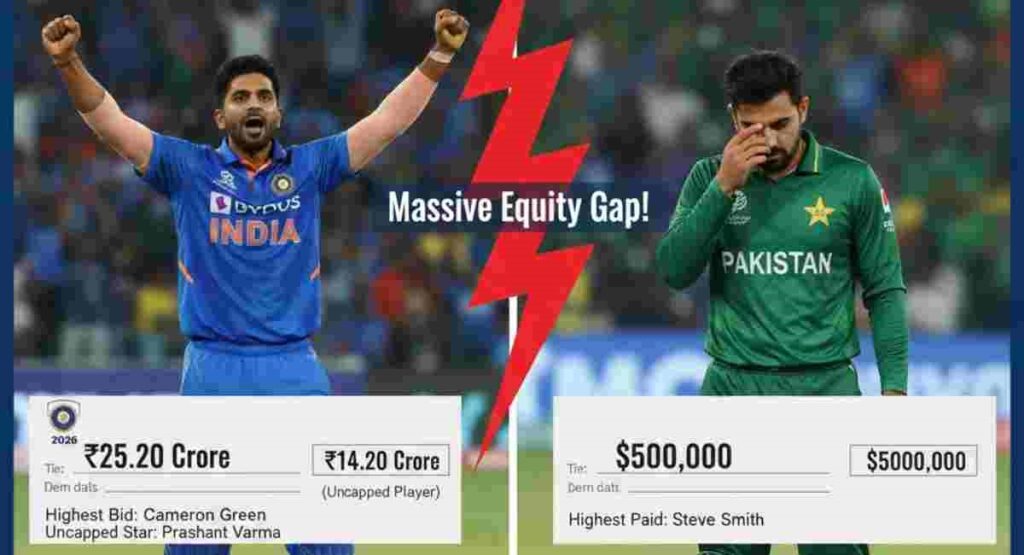
IPL 2026 vs PSL 11 pays: The debate over the pay disparity in franchise cricket has been reaching a crescendo with the recent stats. Entering the 2026 season, the “big league” vs “quality league” debate is becoming eclipsed by cold hard cash. Viewing IPL 2026 vs PSL 11 salary structures, the difference is not really in millions anymore but separated players’ options.
Fans often question why world-class talent opts to sit on the bench in India instead of captaining a side in Pakistan; the answer to that question is purely in the IPL 2026 vs PSL 11 salaries matrices. Despite the PCB’s recent salary increase and introduction of a player auction system, IPL 2026 vs PSL 11 salaries illustrate how an IPL bench warmer almost always makes more money than a Platinum icon in the PSL. This in-depth comparison of IPL 2026 vs PSL 11 pay scales will teach you how broadcasting rights and global sponsorship are making one league a global corporate titan, while the other is a regional favorite.
Table of Contents
1. THE MEGA NUMBERS: HIGHEST-PAID PLAYERS IN 2026:
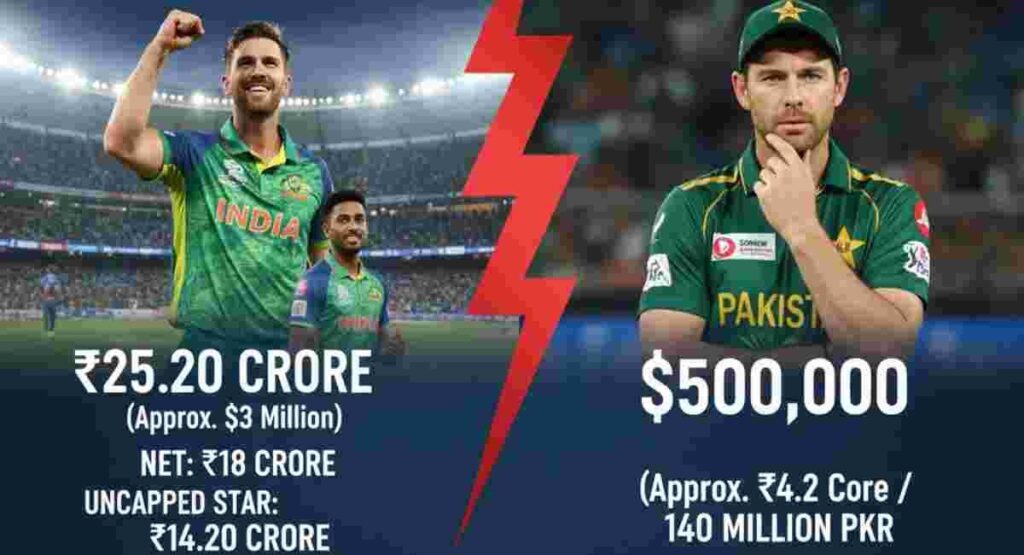
New records have already been set in the 2026 season for both leagues IPL 2026 vs PSL 11 salaries, although the “highest” in one year is a “base” in the other year.
IPL 2026 icon: Australian all-rounder Cameron Green has set a new record in the recent IPL 2026 auction, fetching ₹25.20 crore (approx. $3 million). “The highest development fee received after deduction will be paid in full to the player.” Even after deduction, his revenue is around ₹18 crore.
PSL 11 Icon: Steve Smith has, on the other hand, gone over the league as the most expensive player in the history, achieving a peak of $500000 (approx. ₹4.2 crore or 140 million PKR).
The Sham Shock: Even after Smith’s record-breaking salary in the PSL, he is still earning 75% of Cameron Green’s 2026 IPL https://cricproz.com/ipl-2026-10-best-all-teams-final-squad/ paycheck. In fact, the entire season fee of Steve Smith is less than what an uncapped Indian player like Prashant Varma (₹14.20 crore) earns in the IPL.
2. THE “BENCH WARMER” LOGIC: SITTING IS EARNING:
The worst comparison IPL 2026 vs PSL 11 salaries for PSL followers is the “bench warmer” reality. Among the shopping bargains in IPL 2026 are dozens of former internationals and some brilliant Indian players fetching prices of between ₹2 crore and ₹7 crore.
IPL Bench Worth: Players of the caliber of David Miller (₹2 crore) or Matt Henry (₹2 crore) could very well find themselves out of the starting XI in both matches of their teams.
PSL Equivalent: These IPL “bench” salaries are still far above those of PSL Platinum category local stars such as Babar Azam or Shaheen Afridi, who officially earn nearly 70 million PKR (approx. ₹2.1 crore).
3. STRUCTURAL DIFFERENCES: AUCTION VS. DRAFT:
The PCB adopted the IPL’s model in 2026 when it switched over to a player auction system to rival the IPL but the purse limits speak a different language.
| FEATURE | IPL 2026 (KOLKATA/MUMBAI) | PSL 11 (LAHORE/SIALKOT) |
| Total Team Purse | ₹120 Crore+ ($14M approx.) | $1.4 Million – $2.1 Million |
| Highest Individual Bid | ₹25.20 Crore | ₹4.2 Crore ($500k) |
| Minimum Base Price | ₹30 Lakh | 0.6 Crore PKR (₹18 Lakh) |
4. WHY THE GAP IS HERE TO STAY: THE MEDIA RIGHTS MONSTER:
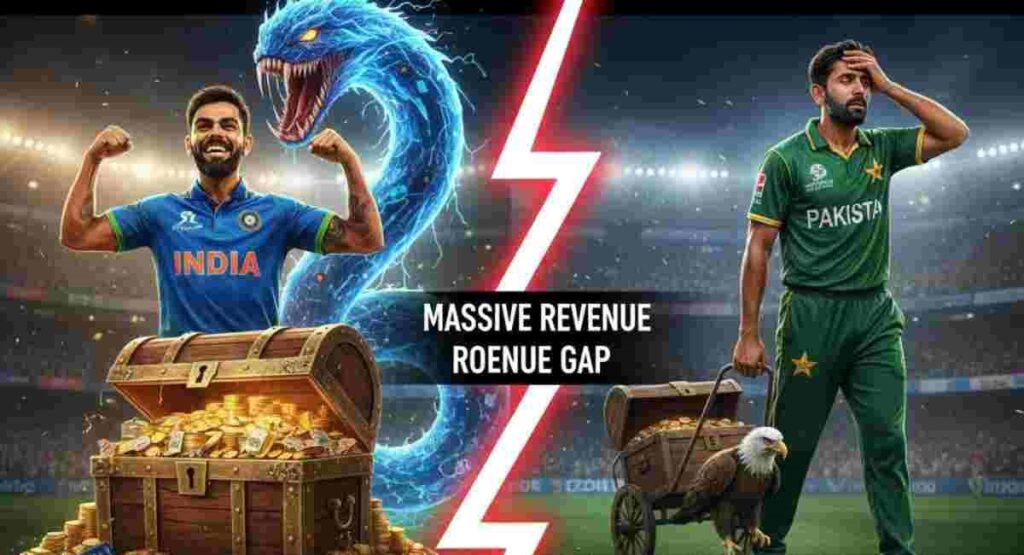
The IPL 2026 and PSL 11 salaries can’t be equal, and that is due to the different revenue models. The BCCI’s lucrative media rights deal (in the region of $6 billion) means that every IPL franchise begins the season in the black, thanks to a giant share of revenue from the central pool. But not so for the PCB’s net media revenue, which, as I said, has been on the rise but still closed at the 3bn PKR mark—which just about covers the wages of, say, four top IPL players IPL 2026 vs PSL 11 salaries.
5. THE UNCAPPED PLAYER REVOLUTION:
2026 has been the IPL 2026 vs PSL 11 salaries ”uncapped millionaire.” In the IPL, both Kartik Sharma and Auqib Nabi Dar got sold at the high prices of ₹14.20 crore and ₹8.40 crore, respectively. An ”Emerging Player” (uncapped) in the PSL generally makes between 15,000 and 25,000 USD. The financial stability a 19-year-old rookie is guaranteed by the IPL is almost 50 times what an equivalent talent receives in Pakistan.
6. OVERSEAS PLAYERS: THE CHOICE OF 2026:
International stars like Mustafizur Rahman recently underscored the gap. After being released from KKR (where his contract was ₹9.2 crore), he joined Lahore Qalandars for approx. ₹2 crore. He took a 77% pay cut to play, in effect, in the PSL https://cricproz.com/psl-11-faisalabad-tickets/. All this establishes the fact that for international stars, the IPL is the primary “job” and the PSL a “secondary source of income” or a “rehab” stin IPL 2026 vs PSL 11 salaries.
7. THE “RETAIN” ECONOMY: LOYALTY IS COSTLIER IN THE IPL:
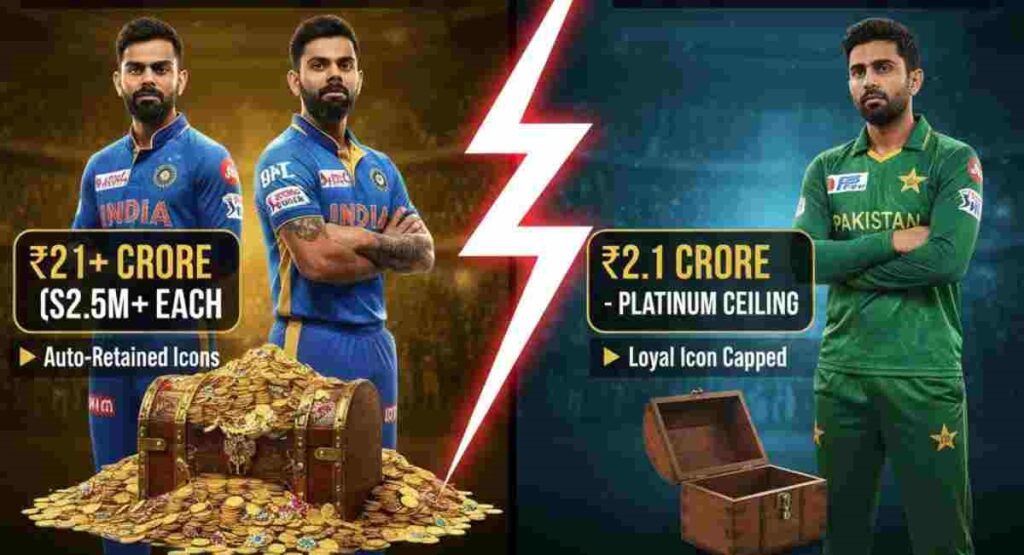
IPL’s retention rules have redefined player wealth in IPL 2026 vs PSL 11 salaries.
IPL Retention: Virat Kohli and Jasprit Bumrah, the crème de la crème of the top-tier players, will be retained at a cost of more than ₹21 crore ($2.5M+) even before they go under the hammer.
PSL Retention: In PSL 11, even your most loyal icons such as Babar Azam face a cap by the league’s “Platinum” salary ceiling. Although while the IPL’s financial rewards for loyalty steeply increase, the fat structure of the PSL hits a plateau, where its local stars dare not even dream to rival the net worth of the IPL’s benchwarmers IPL 2026 vs PSL 11 salaries.
8. SAME OLD STORY: THE TOPLINE REALLY HASN’T CHANGED MUCH FOR 2015:
To analyze IPL 2026 vs PSL 11 salaries, look at what a broadcaster makes.
IPL Ad Rates: IPL: A 10-second IPL ad slot during an IPL 2026 ball costs close to ₹15-₹20 lakh. This massive inflow allows BCCI to inflate player purses.
PSL Ad Rates: In spite of all these views, due to devaluation of PKR against the USD, PSL’s ad revenues are comparatively low at the global scale. This “currency crash” figure is the main explanation for why cricketers’ remuneration in IPL 2026 vs PSL 11 salaries are miles apart.
9. THE “MINI-AUCTION” VS. THE “REPLACEMENT DRAFT”:
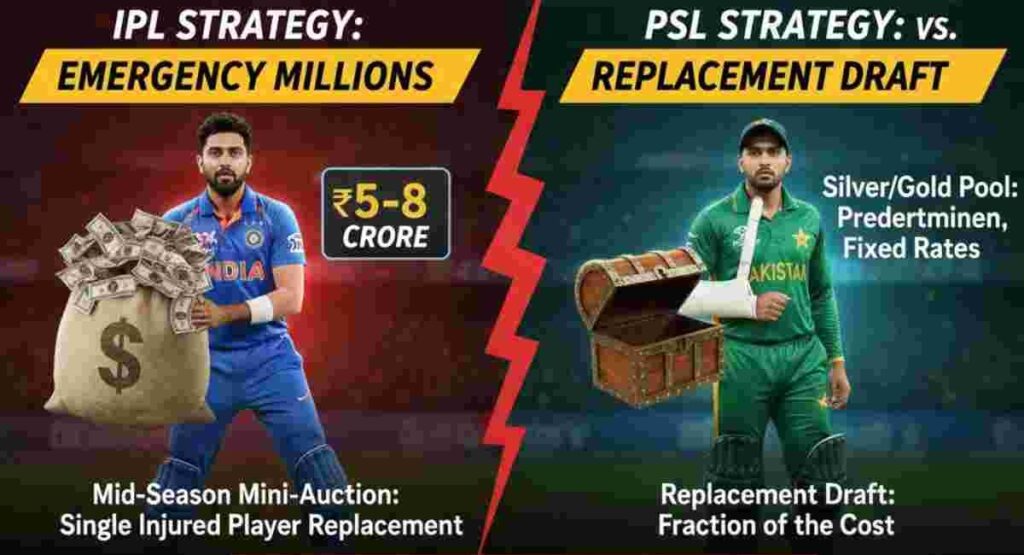
IPL Strategies: IPL teams often go overboard during mid-season or mini-auctions and spend handsomely in the range of ₹5-8 crore for just single players who need replacing due to injuries IPL 2026 vs PSL 11 salaries.
PSL Strategy: In the PSL, substitute players are usually selected from a predetermined silver or gold pool, making a fraction of an IPL injury substitute salary. This just goes to show that even an “emergency backup” in India makes more than a “starting specialist” in Pakistan.
10. THE SECRET EARNING: BRAND ENDORSEMENTS:
Off-field earnings blur the salary https://cricproz.com/bcci-vs-pcb-salaries-2026/ lines between the IPL 2026 vs PSL 11.
The IPL Effect: Getting an IPL contract opens a door to earning anywhere between a good chunk of ₹10-50 crores in brand campaigns (CEAT, Dream11, Puma).
Have a look at the PSL reality: Whereas Pakistani stars like Shaheen Afridi have brands, the Indian corporate sector market size is 10x. Therefore, an IPL bench warmer may get a ₹1 crore regional brand deal in India, which is significantly more than the overall PSL contracts of a number of players IPL 2026 vs PSL 11 salaries.
11. COACHES AND SUPPORT STAFF SALARIES:
It’s not the players alone; the gap between rich and poor rugby extends to the bench too. IPL coaches Gautam Gambhir or Ricky Ponting are in the ₹5 crore to ₹10 crore category, which is more than the highest-paid player in the PSL IPL 2026 vs PSL 11 salaries.
PSL Coaches: While Pakistan’s top coaches rake in $50,000 to $100,000, a figure that is decent but nowhere close to the type of “corporate manager” IPL 2026 vs PSL 11 salaries that dominate the IPL.
12. THE TAXTALE: THE METABOLIC TAKE-HOME PAY:
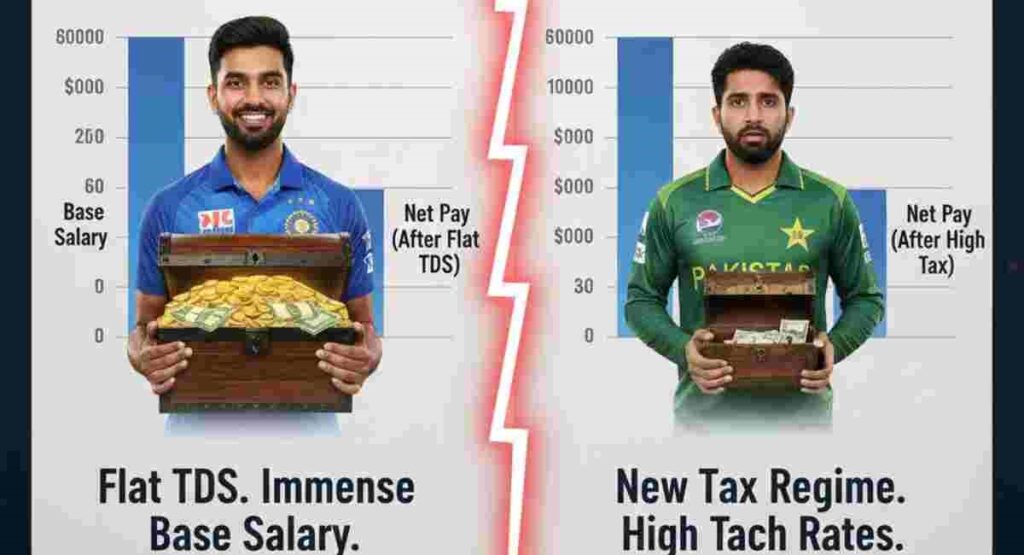
An important but overlooked aspect of the IPL 2026 vs PSL 11 salaries is the tax.
India: Players are subject to a flat TDS; however, given the immense base salary, the “net wealth” is quite high.
Pakistan: Overseas players take away their “Net USD” earnings under the new tax regime in Pakistan for athletes in 2026. The impact of the higher tax rates on not much cash in the PSL makes the IPL’s “million-dollar bench” even more famous IPL 2026 vs PSL 11 salaries.
13. STADIUM GATE AND TICKETING REVENUE:
IPL’s 2026 Season: The IPL comprises 10+ stadiums in 3-4 cities with a capacity of 40,000 to 50,000 with ticket prices in the ballpark of $10-$450 ($10 for students, $50 for hospitality) … The amount of “Gate Money” is the sole reason that IPL players are able to pay such large bonuses. PSL grounds may be legendary, but they can’t command the premium ticket prices cities like Mumbai or Bangalore can—and that translates directly into the “bonus pot” that’s available in IPL 2026 vs PSL 11 salaries.
14. FRANCHISE VALUATION VS. PLAYER COST: THE 100x STRUCTURAL GAP:
Brighton has demonstrated that it is fully possible to build a PSL 11 IPL 2026 salaries team on a budget in 2026 vs PSL 11 salaries. The sale of the franchises in PSL 11 along with the welcome of two new teams – Sialkot Stallions and Hyderabad Hunters – for an approximate ₹56–59 crore (around US$6.5M).
The IPL Comparison: That’s because the full purchase price for a new PSL team (which includes 20+ players and support staff) is approximately equal to the yearly salary of a mere two IPL 2026 vs PSL 11 salaries.
IPL stars: Rishabh Pant and Shreyas Iyer. When the pay package for a single player is worth more than the valuation of an entire franchise in another league, it explains why $1000000 in 2026 vs 11 league salaries are light-years apart.
15. PRIZE MONEY DISPARITY: WINNING ISN’T FINANCIALLY EQUAL:
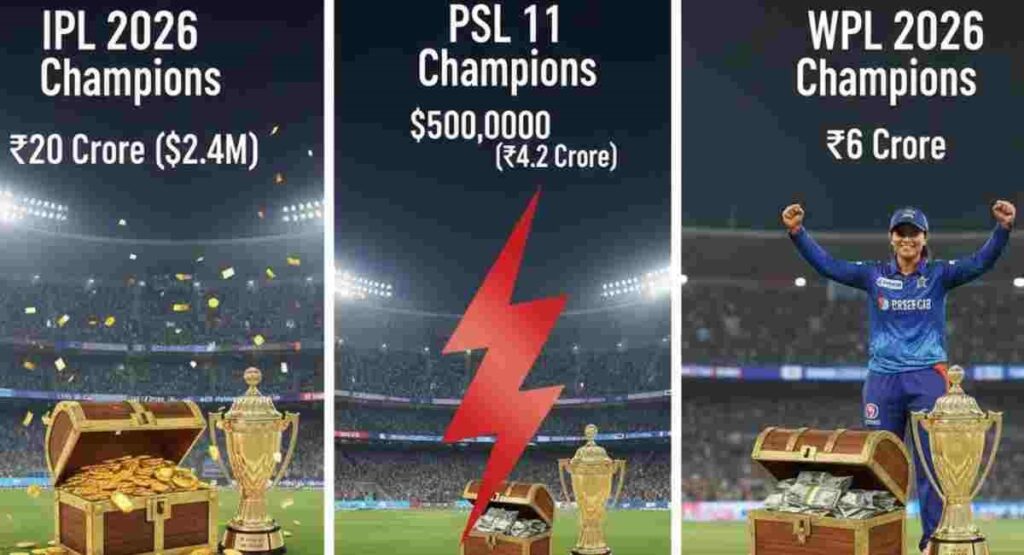
In terms of money, not just when it comes to contracts, but even in the rewards for performing excellently. So, in terms of money, you could say what the gap in IPL 2026 vs PSL 11 salaries packet is.
IPL 2026 Champions: The IPL champion is awarded ₹20 crore ($2.4M). PSL 11 Champions: The prize pool has been raised by the PCB, but the victors will earn $500,000 (approx. ₹4.2 crore).
The WPL Paradox: Interestingly, the winner’s purse of India’s Women’s Premier League (WPL 2026) http://WPL 2026 winner prize money is ₹6 crore. This shows that a female cricketer winning the WPL takes home more prize money than a male icon winning the PSL, demonstrating the sheer financial dominance of the BCCI ecosystem.
16. HOSPITALITY AND VIP REVENUE: THE MONETIZATION OF LUXURY:
Rich boards have used “VIP culture” to bleed out liquid cash that makes the player’s purse bigger IPL 2026 vs PSL 11 salaries.
IPL Corporate Native Space: One VIP corporate box at stadiums like Mumbai or Bangalore can cost anywhere from ₹5 lakh to ₹15 lakh per match. With such seats, a franchise can earn anywhere between ₹50 and ₹80 crore in a single season.
PSL Hospitality: The PSL hospitality tickets, on the other hand, come at a substantially cheaper price (₹5,000 – ₹20,000 PKR). This shortfall in revenue handicaps the franchises ‘ability to compete with IPL 2026 vs PSL 11 salaries, as they just don ‘t has the same amount of gate-receipt earnings.
17. THE “SCHEDULE CLASH” FACTOR:
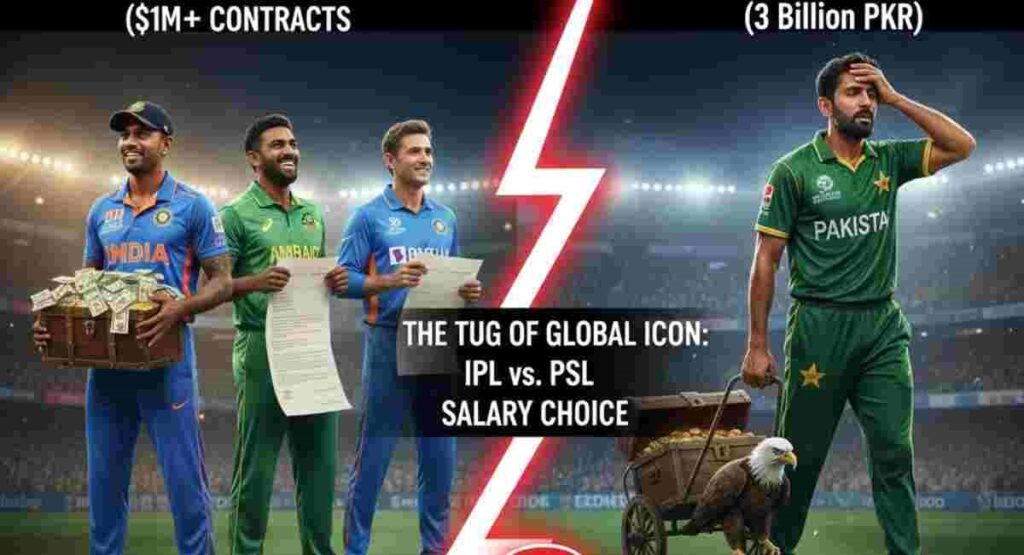
The Tug of Global Icons For the first time in 2026 the IPL and PSL fixtures are running on a complete clash, and players will be forced to decide which PSL 11 IPL 2026 salary they want to earn.
Player Preference: Confronted with a straight choice, well over 90% of marquee overseas players have gone with the IPL’s $1 million-plus contracts over the PSL’s Platinum’s.
The Exceptions: Veteran players like Faf du Plessis and Moeen Ali also occasionally opt for the PSL on grounds of ‘challenge’ or shorter length, but the majority of the world’s superlative talent follows the money, and it stands to reason that financial security now more than ever outpaces league allegiance.
CONCLUSION:
In the final analysis, a comparison of salaries in the IPL 2026 vs PSL 11 salaries shows that the divide goes beyond sport—it is indicative of two completely different economic motors. Despite showing tremendous grit and development by way of launching its first-ever player auction system in 2026 as well as securing marquee additions in the likes of Steve Smith, the Pakistan Super League (PSL) is still very much a “passion-driven” regional circuit. Meanwhile, the Indian Premier League (IPL) has evolved into a ‘commercial-driven’ global behemoth.
That a reserve player IPL 2026 vs PSL 11 salaries in the IPL makes many times more money than a PSL platinum icon is not a criticism of the talent in Pakistan but an indication of the BCCI’s commercial clout. With media rights worth billions and a fan base that makes up almost 80% of the world’s cricket economy, the IPL is simply a different financial league altogether. And with the rest of the 2026 season to go, the IPL 2026 vs PSL 11 salaries disparity can only grow ever larger, the IPL entrenching itself yet more as the undisputed “Wall Street of Cricket” even as the PSL keeps developing as a quality, talent-heavy alternative.
Frequently Asked Questions (FAQs)
Q1: Who is the highest-paid player in the 2026 IPL from the previous season’s best batsmen?
Ans: Australian all-rounder Cameron Green holds the record for the most expensive player in the IPL 2026 vs PSL 11 salaries auction with a bid amount of ₹25.20 crore ($2.8M), but after the BCCI development fee is deducted, his pay is approximately ₹18 crore. In PSL 11, the top-earning cricketer is Steve Smith, who bagged a record-breaking contract of $500,000 (approx. ₹4.2 crore) with Sialkot Stallions.
Q2: Why does an all-day IPL bench warmer earn more than the best captain in the PSL?
Ans: This is because of the colossal media rights value. Each team gets a purse of more than ₹120 crore due to the IPL’s centralized pool distribution. Even a reserve player bought for ₹5 crore makes more than the PSL Platinum ceiling (approximately ₹2.1 crore for local stars like Babar Azam), as the commercial market is 100 times bigger for the IPL 2026 vs PSL 11 salaries.
Q3: new PSL 11 auction system closing the salary disparity?
Ans: The PSL 11 Auction System has led to a rise in player salaries (Steve Smith earns twice as much as Babar Azam’s ban); however, it hasn’t closed much of a gap between the IPL. However, the entire purse of a full PSL team ($1.4M-$2.1M) is still below the salary earned by one IPL player at the highest tier IPL 2026 vs PSL 11 salaries.
Q4: How will the prize money for both the leagues be in 2026?
Ans: There is a big difference: the winner of IPL 2026 will get ₹20 crore ($2.4 million), while the prize money for the winner of the 11th edition of the PSL is $500,000 (approx. ₹4.2 crore). Curiously, the prize money of India’s WPL (Women’s Premier League) of ₹6 crore also outpaces that of the men’s PSL prize money IPL 2026 vs PSL 11 salaries.
Q5: What makes the IPL more attractive to overseas players when schedules clash with the PSL?
Ans: Money is the biggest reason. The IPL offers around $1 million to $2 million for two months of work, and the majority of the world’s best players cannot justify a 70-to-80% reduction in pay to play in the PSL, even though they like the shorter duration or the quality of bowling of the league in Pakistan.
Q6: How will the IPL 2026 and PSL 11 salaries be affected by currency devaluation?
Ans: The Pakistani Rupee (PKR) devaluation against the US Dollar and the Indian Rupee (INR) is a big blow for the PSL. Even as salary increases in PKR from the PCB, the dollar value remains low for the players, and so the INR-backed IPL contracts are simply so much more lucrative and more stable.