In this age of T20 and ODI cricket, the worth of a bowler is not just on wickets taken, but on how many runs they allow. This is where the importance of economy rate in cricket comes in handy. The economy rate in cricket helps the fans and experts to find out who exactly is the most disciplined bowler on the ground.
To ensure you have a better grasp of this subject, we have described the economy rate in cricket in very simple words, even if you are a novice. Should be able to equip economy rate in cricket counting following a skill for 2016; every serious cricket follower is going to be in 2026 for watching this ancient game. This master guide will take you into the depth of bowling stats and turn you on to what the economy rate in cricket can do when it comes to determining the outcome of a match.
1. WHAT IS ECONOMY RATE AND WHY IS IT IMPORTANT?
The economy rate refers to the runs a bowler yields on average per over. Although the bowling average informs us on wicket-taking ability, the economy rate informs us on how well the bowler is controlling the runs. “Also check out our guide on Net Run Rate in Cricket.”
The Calculation for Economy Rate:
In order to calculate this, there are two important values you need: how many runs you gave and how many overs you bowled. $$Economy\ Rate = \frac {\text {Total Runs Conceded}} {\text {Total Overs Bowled}} $$
2. CALCULATION OF ECONOMY RATE IN 5 EASY STEPS:
Here is how you can calculate the economy rate of any bowler:
Count Total Runs: Add up all the runs given away (wides, no balls, and leg byes are included).
Add up the total overs: how many legal balls you have bowled.
Convert Partial Overs: As an example, if a bowler has bowled 5.3 overs, he converts the large number ‘0.3’ to ‘0.5’ for calculation.
Divide Runs by Overs: Apply the above-mentioned formula.
Analyze the Result: Under 6.00 is usually thought to be “great” in T20s.
3. ECONOMY RATE VS STRIKE RATE: WHAT IS THE DIFFERENCE?
There seems to be a general confusion in the minds of some fans about these two terms. You need to know that:
Economy rate: Trying to contain how many runs an over cost.
Strike rate: Focuses on the number of deliveries bowled before a wicket is taken.
Why T20 Cricket Changed Its Economy:
Expectations An economy of 3.00 is par for Test cricket. But in the likes of IPL, 8.50 is also sometimes considered good on high-scoring tracks and with powerplays.
Top 3 career economy rate bowlers in the world:
Muttiah Muralitharan (ODIs): Just like his control was legendary in Tests.
Rashid Khan (T20Is): The pre-eminent bowler of the modern game.
Sunil Narine: He is known for bowling maidens in pressure games.
4. DEEP DIVE INTO MODERN ECONOMY RATE STRATEGIES:

The development of white-ball cricket has dramatically altered the meaning of economy rate in cricket. A defensive mindset was all that was required to have a good economy in cricket in those days, but bowlers have to be aggressive and multi-dimensional today. A bowler who is unable to adjust their economy rate in cricket according to playing surface conditions generally finds it difficult to make it big in franchise leagues. So, gaining control over the economic rate in cricket requires mastering the subtleties of the “death overs” and the “powerplay.”
Bowling Statistic: The Impact of Powerplay:
The fielding restrictions present in the initial six overs of a T20 game render maintaining a low economy rate in cricket greatly difficult. The Target opening bowlers, who are all pretty good, should get an economy rate in cricket close to 7.00 during this pass. If a bowler gives away less than 6 runs an over in the powerplay, it dramatically changes their overall economy in cricket for the better and greatly helps their team. The defense of the economy rate in cricket during the first few successful overs usually appears to determine the beats of the inning.
5. HISTORICAL ANALYSIS OF ECONOMY RATES:
If we see the history of the game, we all know legendary bowlers like Malcolm Marshall, Dennis Lillee, or Muttiah Muralitharan and their economy rates in cricket were much different than what the stars of today can boast about. In the era of the 1990s, an economy rate in cricket of 4.00 in ODI was considered the epitome. Still, with smaller boundaries and better bats by 2026, keeping that same economy rate in cricket is even harder. Despite these setbacks, a few bowlers still manage to top the charts by their economy rate in cricket, and that too by focusing consistently on their line and length.
Effect of Terrain on Bowlers’ Economy:
Dry and Dusty Pitches: On such tracks, the spinners tend to have a better economy rate in cricket, as the ball grips and turns and batting is tough.
Flat batting tracks: On pitches such as those you often see in the IPL, 9.00, even for the best bowlers, might be considered a good economy rate in cricket.
Green Grass Surfaces: Fast bowlers can keep an economy rate in cricket on the lower side by exploiting the movement off the seam and getting the ball to beat the bat.
Small Boundaries: In the ground where the boundary is small, every mistimed shot is a threat to a bowler’s economy of runs.
6. RECORD-BREAKING ECONOMY RATE IN CRICKET: LEAGUES VS. INTERNATIONALS:

Some of cricket’s all-time greats have set such high bars that it seems unthinkable to maintain such economy rates in cricket. Comparing the economy rate in cricket in international cricket, the names of legends like Joel Garner and Richard Hadlee come to mind, as they were among the most disciplined bowlers. Even today, keeping a lid on the economy rate is the chief aim of any top-class spinner in cricket. The chances of the team winning increase more than 70% if the team has two bowlers whose economy rate in cricket is below 5.00 in an ODI. All these facts all show the significance of economy rate in cricket in terms of team and player performance.
The Best Economy Rate in IPL History:
IPL cricket is well-known for its high scores, but several bowlers have controlled the economy rate in cricket even on flat pitches.
Rashid Khan: He is one of the best leg spinners in T20 and also has an incredibly low economy rate in cricket for a T20 leg-spinner.
Sunil Narine: One of the mystery spinners, his economy rate in cricket is one of the nightmares for batsmen, especially in powerplay.
Jasprit Bumrah: The Indian pacer can bowl Yorkers at will, and this can help him maintain his tight economy rate in cricket during death overs.
7. HOW ARE DEATH OVERS AFFECT THE ECONOMY RATE IN CRICKET:
It is the toughest time for any bowler to contain his economy rate in cricket between the 16th and 20th over. At this stage batsmen seek to hit every ball for a boundary, which can throw off a bowler’s economy rate in cricket in as little as a couple of minutes. To keep a good economy rate in cricket, bowlers use variations like slower balls and wider Yorkers. A costly 25-run over can take bowler’s economy rate in cricket from 6.00 to 10.00 in a flash.
8. STRATEGIC TIPS FOR BOWLERS TO IMPROVE ECONOMY:
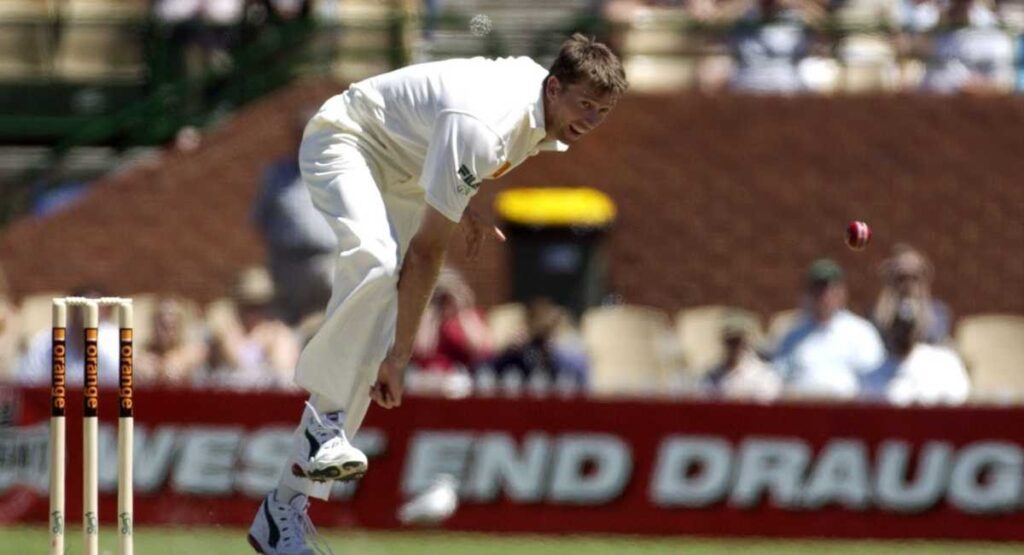
Bowling Dot Balls: All dot balls at the innings close are a great source for a low economy in cricket.
Changing Pace: A change of pace can help mess with the rhythm of the batsmen, which is useful in maintaining a decent economy in cricket.
Field Setting: To set the right field is half the work to keep the economy rate good in cricket.
9. THE PSYCHOLOGY OF BOWLING DOT BALLS:
Bowling dot balls is the best way to bring the economy rate down in cricket. When a bowler is making a habit of bowling dots, it adds a lot of pressure on the batsman, which ultimately ends in a wicket. From a statistical standpoint, a high percentage of dot balls translates to a world-class economy rate in cricket. The most successful T20 bowlers pay as much attention to “dot ball percentage” as they do to their overall economy rate in cricket when assessing their performance, and here are the top 2 in that field from all-time competitions.
10. BOWLER STATISTICS: THE EFFECT OF CAPTAINCY:
Field positions made by the captain can conserve or damage bowling economy in cricket. An aggressive field can contribute to a rise in the economy rate in cricket, but more dismissals may occur. On the other hand, a defensive field contributes to a slightly higher economy in cricket but takes away some easy boundaries. So, one can say the economy rate in cricket depends on how the team has planned their overall tactics.
11. Economy Rate in Cricket by Format Specifications Comparison:
Test Cricket: You can expect your economy rate in cricket to be about 2.5 to 3.5 if there is no pressure to score.
One who wants a fast economy should aim to keep it below 5.50.
T20 Cricket: Due to the quick nature of T20 cricket, an economy of 8.00 or thereabouts is considered good.
The Hundred/T10: In that when the game is abbreviated to such a short length, the economy rate in cricket hits the roof and can turn to 10.00 or even 12.00.
12. HOW TECHNOLOGY ASSISTS IN RUN CONTAINMENT:
Today, modern-day bowlers employ data analytics to analyze a batsman’s “scoring zones” and negotiate their line and length accordingly to reduce their economy rate in cricket. Bowling attacking lines and lengths around a batsman’s weak areas, they can bring down their economy rate in cricket. Video analysis enables bowlers to observe precisely where they gave away runs in previous games, so they can work on fixing their economy rate in cricket for upcoming matches. To keep the economy rate down in cricket in 2026 will be as much about data as it is about talent.
13. “ECONOMIC” VALUE IN PLAYERS ACTION:
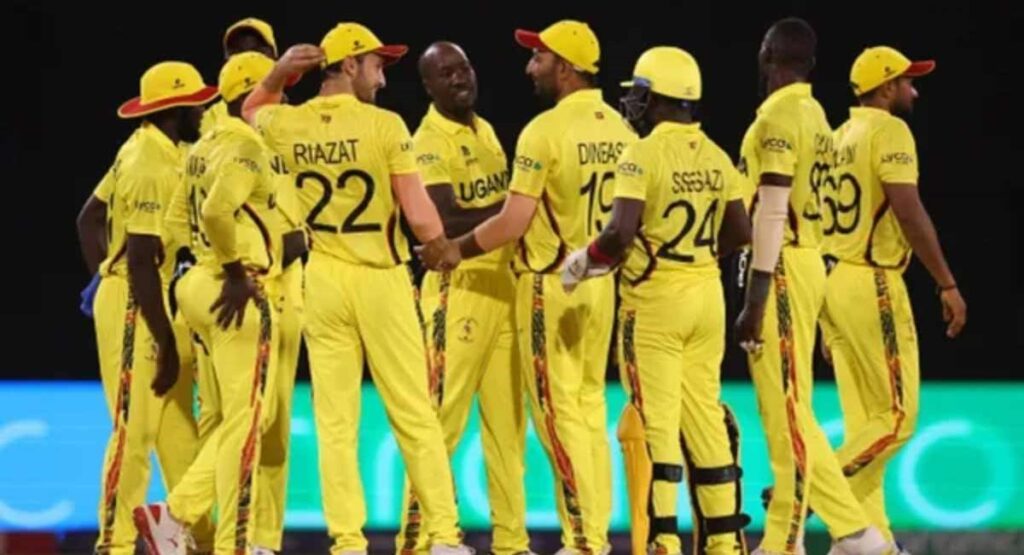
Players with a low career economy rate in cricket tend to fetch bigger amounts in leagues, including the IPL. Teams covet “containment bowlers” who can slow the run rate in cricket over the middle overs. A bowler who may not have many wickets but has a very good economy rate in cricket is looked upon as the mainstay of the bowling attack. Therefore, a positive economy rate in cricket has an immediate influence on the professional market value of a player.
CONCLUSION:
Learning to control the economy rate in cricket is a never-ending pursuit for every professional bowler. Tees, tees, and wickets are what get the headlines, but a disciplined economy rate in cricket is what wins premierships. If there is one statistic every cricket fan should know, then it is that the economy rate in cricket is a true indicator of a bowler’s patience and accuracy. So, with the above 5 steps, you can consider yourself a pro and calculate the economy rate in cricket of any player.
FAQs
Q1: What is a good economy in T20 cricket In T20, what is called a good economy in cricket?
A. In modern T20 (2026), a good economy rate is considered to be below 7.50. Batology, a bowler who bowls mainly in the death overs, and an economy in cricket of 9.00 are also considered good.
Q2: Does a maiden over affect the economy rate in cricket?
A. Yes, a maiden over lowers the economy rate in cricket substantially because it contributes to the number of dot balls, which are six in a maiden over.
Q3: Is the economy rate more important than wickets in bowling?
A. Case-specific It’s important to have low economy rates in middle overs to apply pressure. But to win matches, you also need the high-bowling-average bowlers who take wickets.
Q4: Economy rate in cricket with wides and no-balls?
A. How are wides and no-balls treated in the economy rate in the game of cricket? As wides and no-balls tally up the runs conceded, this will increase the economy rate in cricket. Because they are not considered balls in an over, they influence a bowler’s ability to keep a strong economy rate in cricket.
Q5: Who has the best economy rate in the history of cricket?
A. In test cricket, Bapu Nadkarni is well-known for his stupendous economy rate in cricket; he bowled 21 consecutive maidens in one of the innings. In modern-day ODIs, players like Rashid Khan are often in the top charts.
Q6: Is it possible for a bowler to have an economy rate of 0.00 in cricket?
A. Yes, if a bowler bowls his/her entire spell (4 overs in T20, 10 in ODI) without giving away any run, his economy rate in cricket is 0.00.